The Banda Islands are among the most remote and storied cruising grounds in Indonesia — a scatter of small volcanic islands in the middle of the Banda Sea, a long day’s sail from the nearest airport at Ambon. These are the original Spice Islands: for centuries the only place on Earth where nutmeg and mace grew, and the reason European fleets fought their way across the world to reach them. Today the same islands hold empty coral walls, a perfect little volcano rising straight from the sea, and a colonial town frozen in time — and almost no other boats. Because the crossing is exposed, the Banda Sea is only comfortably reachable in two short windows a year, which makes timing the single most important part of planning a charter here. This is the plain-English guide to a Banda Sea yacht charter: what you see, the two seasons, which vessel, how long, and how to reach it.
The Banda Sea, and why you need a boat
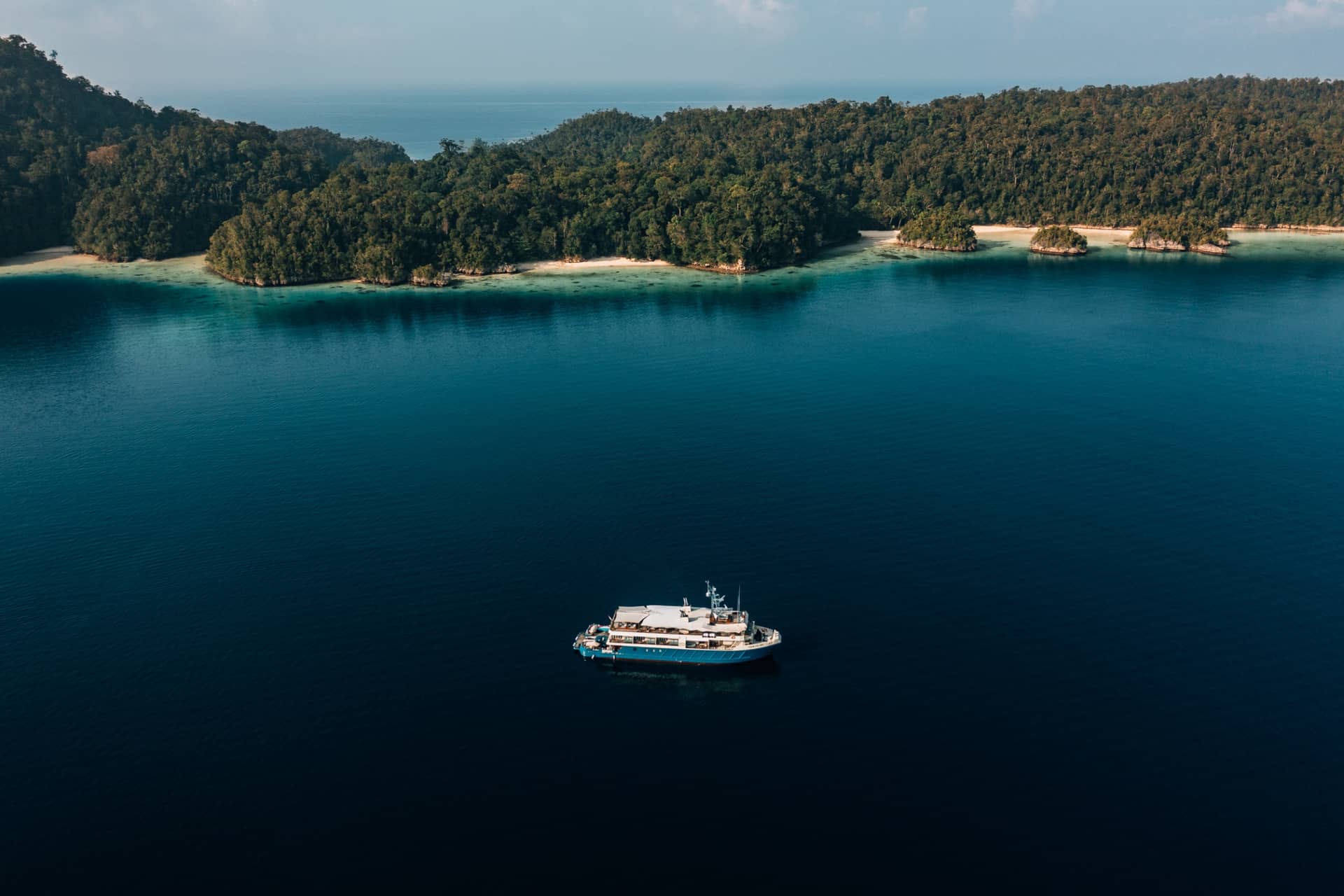
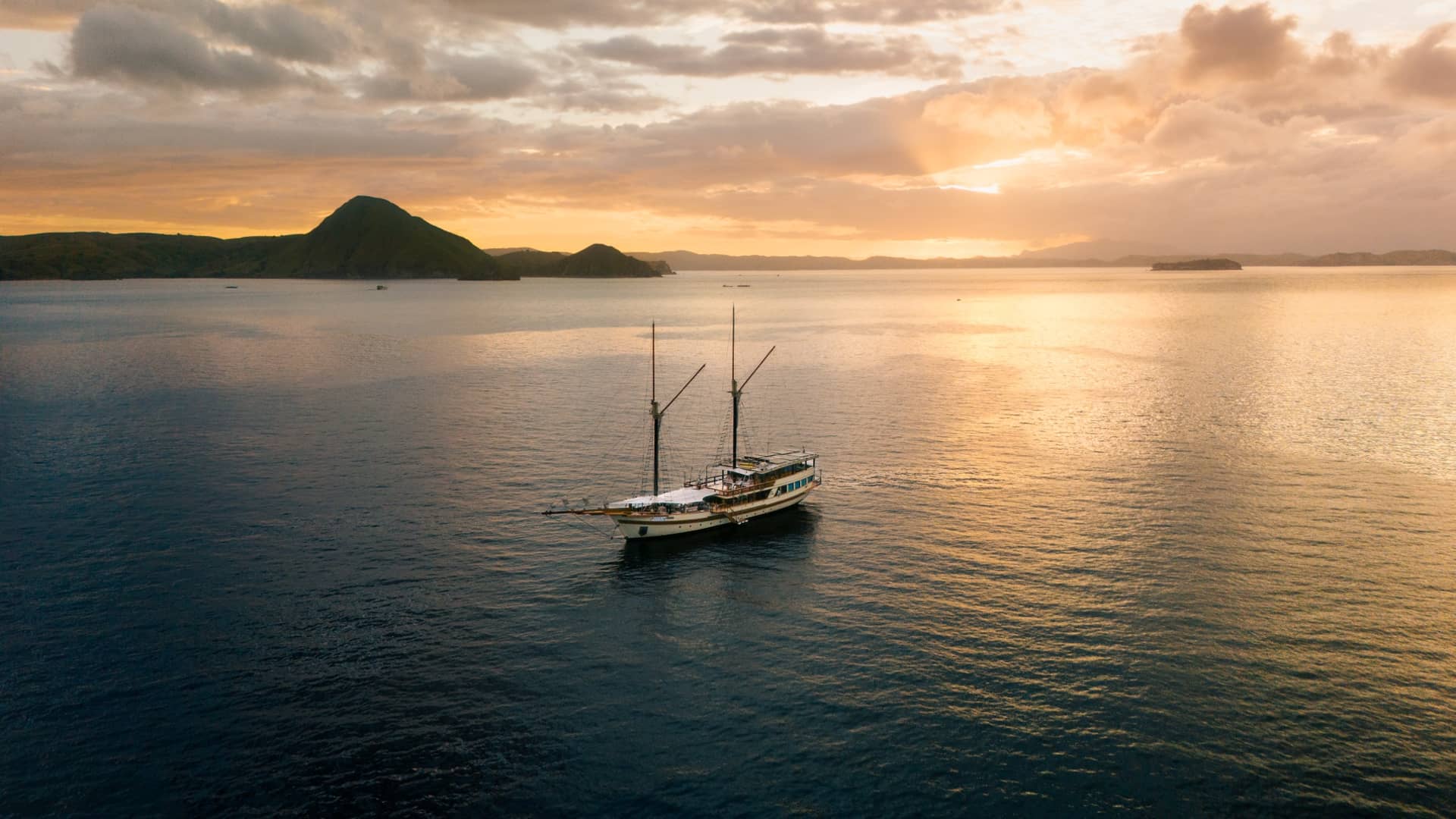
The Banda Islands sit in the Maluku province of eastern Indonesia, roughly 130 kilometres south of Seram and a full open-water crossing from Ambon, the regional gateway. Banda Neira has only a small airstrip with infrequent, unreliable light-plane flights, so in practice the islands are reached by sea, which is exactly why they have stayed quiet. A crewed phinisi or expedition yacht is the way to arrive: it carries you across the Banda Sea in comfort, anchors off Banda Neira beneath the volcano, and becomes your base for a week or more of walls, villages and empty reefs that day boats simply cannot reach. This is expedition cruising, not a day trip — the reward for the distance is that you often have the anchorage, and the dive site, entirely to yourselves.
The reward for the distance is that you often have the anchorage entirely to yourselves.
The original Spice Islands: nutmeg, Run and Manhattan
For most of recorded history the Banda Islands were the world’s only source of nutmeg and mace — two spices worth, weight for weight, more than gold in the markets of Europe. That monopoly drew the Portuguese, then the Dutch, who fortified the islands in the seventeenth century to control the trade. The story reaches its strangest point at Run, the westernmost Banda island: under the 1667 Treaty of Breda the Dutch kept Run and its nutmeg and, in exchange, handed the English a swampy North American island called Manhattan. Sailing into Banda Neira today, you pass the same waters — and the nutmeg groves on Banda Besar are still worked much as they were four hundred years ago.
The Dutch kept Run and its nutmeg and handed the English a swampy island called Manhattan.
Banda Neira: the town under the volcano
Banda Neira is the tiny capital of the group — a walkable colonial town of Dutch merchant houses, a waterfront promenade and two forts. Fort Belgica, the star-shaped fortress built above the town in 1611, looks straight across the strait to Gunung Api, the near-perfect volcanic cone that rises from the sea beside it; the older Fort Nassau sits below. In the 1930s Banda Neira was a place of exile for Indonesian nationalists, and the preserved houses of Mohammad Hatta and Sutan Sjahrir are now small museums. It is a place to go ashore slowly: buy hand-grated nutmeg and mace at the market, climb Belgica for the classic view of the volcano across the anchorage, and watch the town’s outrigger canoes come and go.
Gunung Api & the lava-flow coral garden
Gunung Api — literally "fire mountain" — is an active volcano that rises around 640 metres straight out of the sea next to Banda Neira, and it is the signature image of any Banda charter. Its last major eruption, in 1988, sent a lava flow down into the sea on the north side; in the decades since, that bare volcanic slope has grown one of the fastest-recovering, most vivid hard-coral gardens anywhere, now a celebrated dive and snorkel site simply known as the Lava Flow. Fit guests can climb the cone at dawn for a view over the whole archipelago. Below the surface, the reef that has colonised the lava is a living lesson in how quickly the Banda Sea heals.
Diving & snorkelling the Banda walls
The Bandas are, above all, a diving destination — famed for steep, clean coral walls, clouds of fish and water clarity that comes from being far from any river mouth. The reefs around Banda Neira, Banda Besar and the outer islands of Ai and Hatta drop into deep blue and teem with fusiliers, snapper and the occasional passing pelagic; Ai and Hatta in particular are known for their walls and, at times, mandarinfish. Further offshore, the remote seamounts and the volcanic islet of Manuk — long nicknamed "snake island" for the sea snakes that gather there — are the province of longer expedition itineraries, and in the right months the Banda Sea is one of the places schooling hammerheads are hoped for. Snorkellers are just as well served: the Lava Flow and the shallow reefs off the islands are vivid straight off the back of the tender.
The two seasons — when to sail the Banda Sea
Timing matters more here than almost anywhere in Indonesia, because the Banda Sea is open water and only settles between the monsoons. There are two calm windows. The main season is September to November, when the seas ease, visibility is at its best and the islands are at their most reliable — this is the prime window for a Banda charter and the one most vessels schedule. A shorter, quieter shoulder falls around April and May, between the wet-season winds. Outside those windows the crossing from Ambon is exposed and few boats attempt it. Because the Bandas often sit on a longer repositioning voyage — a yacht moving between Komodo, Raja Ampat and the Spice Islands as the seasons turn — the calendar for any given vessel is set well ahead, so the earlier you plan, the more choice you have.
Timing matters more here than almost anywhere in Indonesia.
Which yacht, and how long
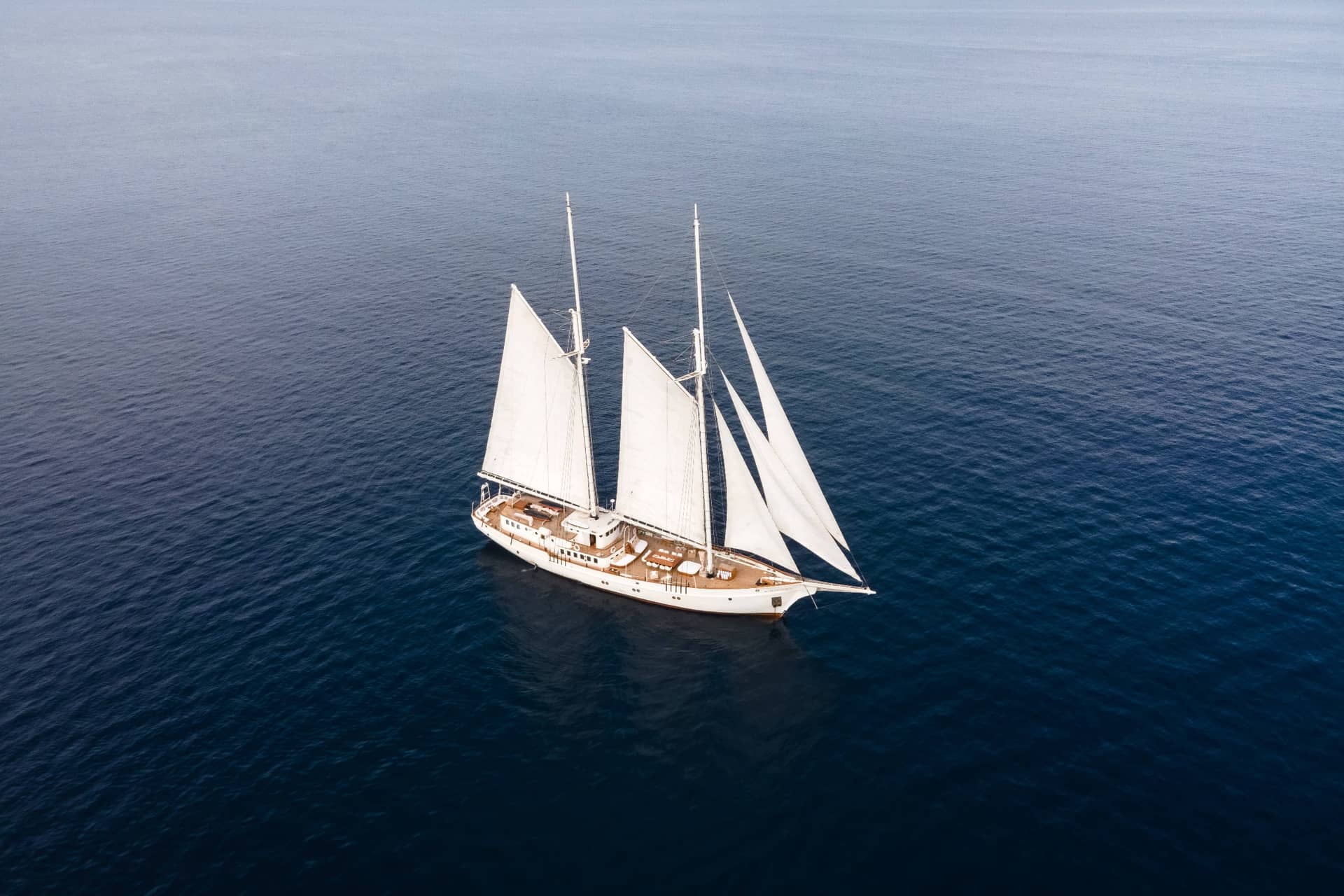
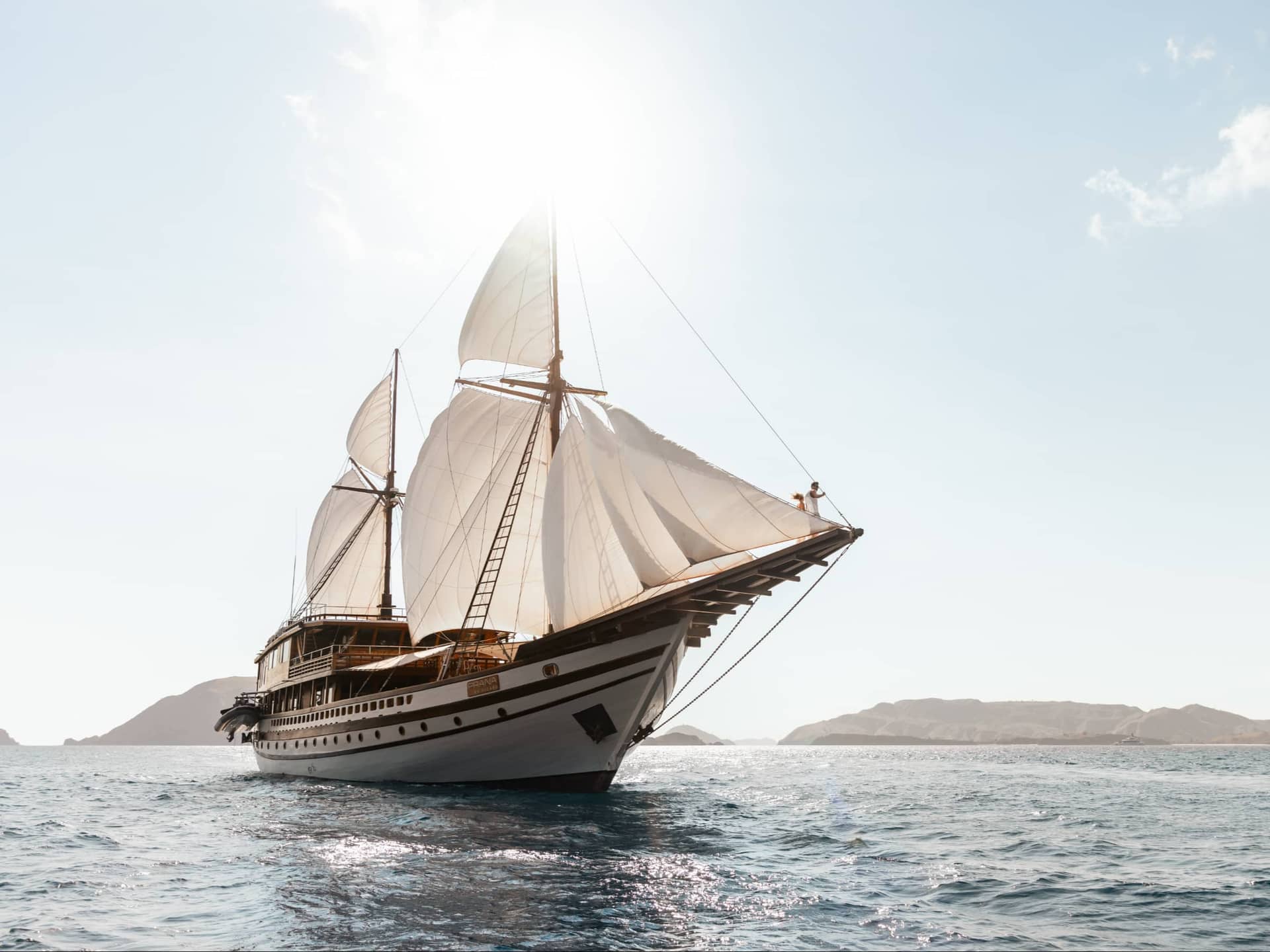
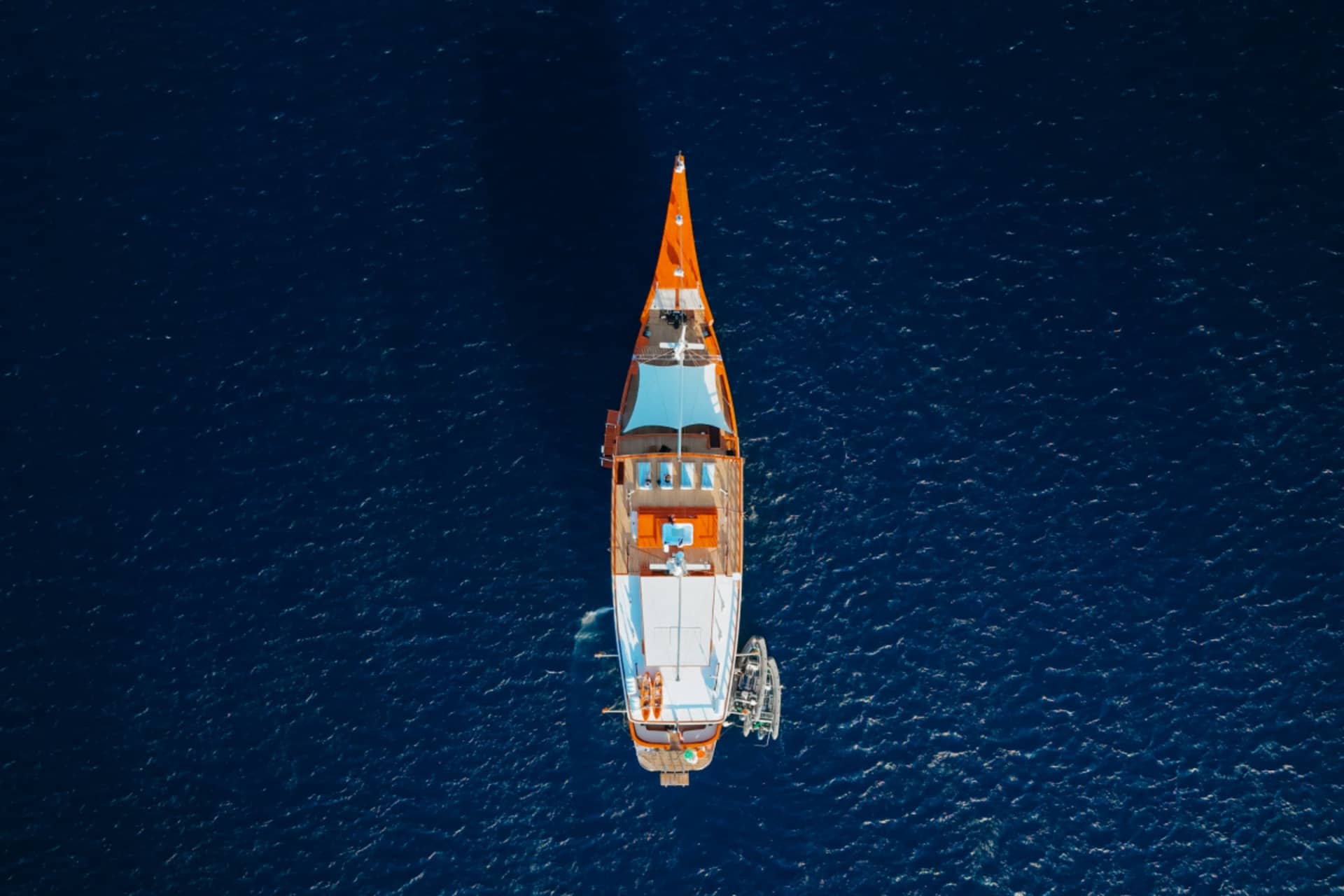
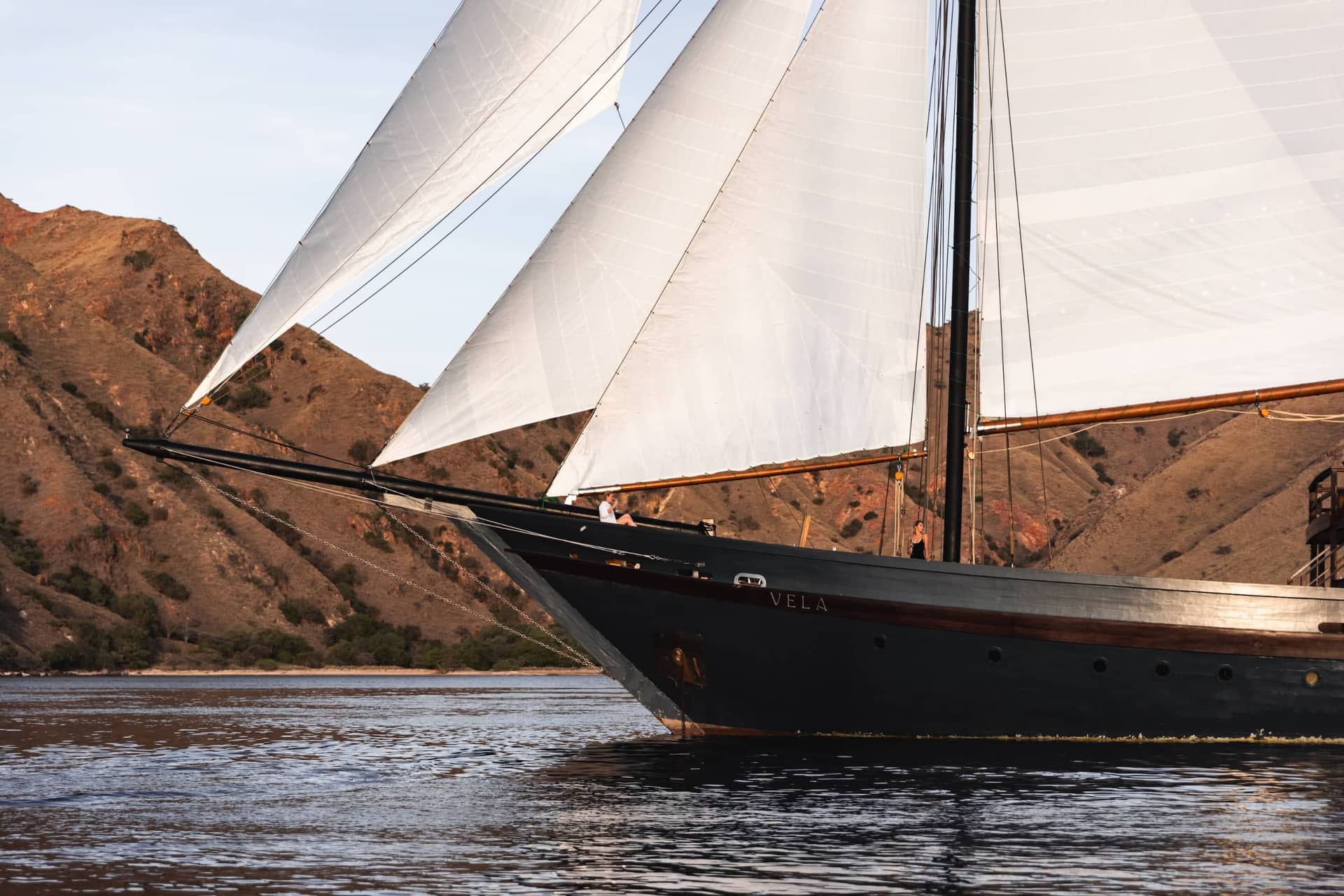
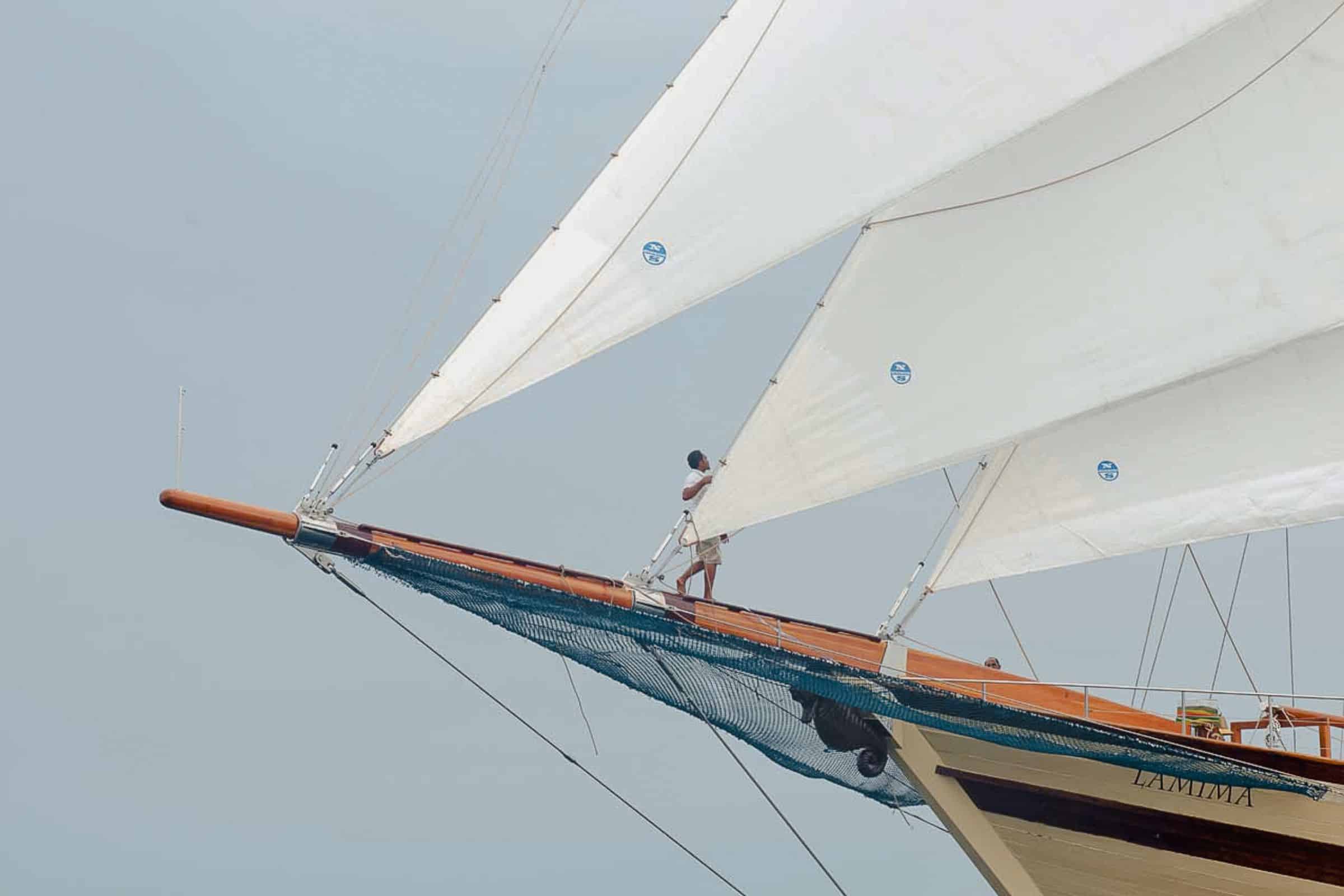
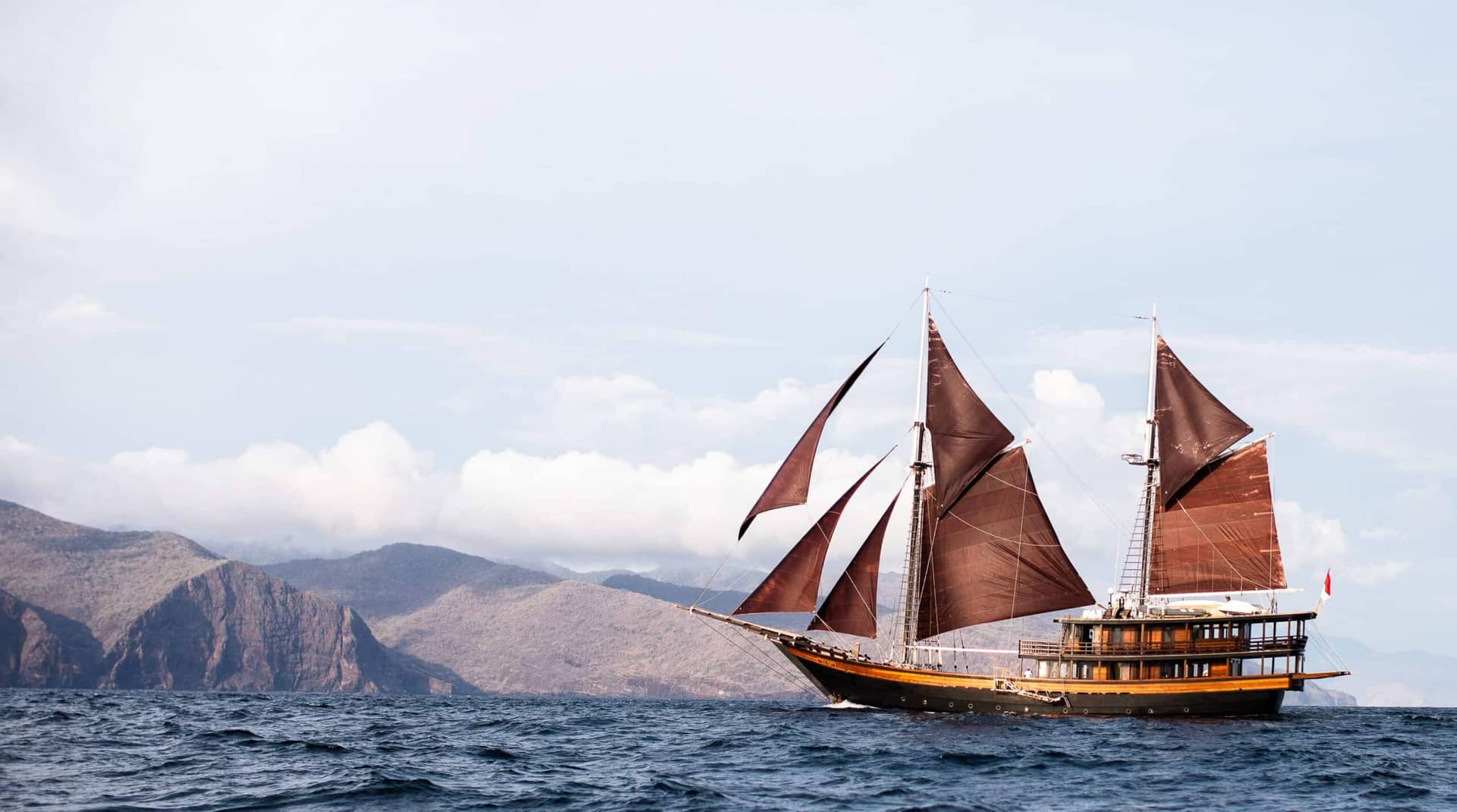
The Bandas are cruised on crewed phinisi and expedition yachts built for open-water passages and multi-day diving — vessels with a chef, a dive guide and the range to cross the Banda Sea and stay out for a week or more. Because the archipelago is remote and the crossing from Ambon is long, a Banda charter is not a short trip: seven to eleven nights is the usual span, enough to take in Banda Neira and Gunung Api, the nutmeg islands of Banda Besar and Run, the walls of Ai and Hatta, and — on the longer itineraries — the far seamounts and Manuk. Many charters pair the Bandas with a wider Spice Islands or Forgotten Islands crossing, sailing on to or from Ambon, Alor or beyond. Pricing is per night for the whole boat and varies widely by vessel; the exact rate is shown on each yacht’s page.
A sample Banda Sea itinerary
A typical week starts and ends at Ambon. Day one is the crossing — an overnight passage south across the Banda Sea, arriving at Banda Neira the next morning to anchor beneath Gunung Api. The middle of the trip is spent among the islands: the town and forts of Banda Neira, the Lava Flow dive on the volcano, the nutmeg plantations and old perkeniers’ houses of Banda Besar and Lonthoir, and the walls of Ai and Hatta. Longer itineraries push out to Run — the "Manhattan" island — and, on the most ambitious expeditions, to the lonely seamounts and Manuk before the return passage to Ambon. The exact route bends to the weather and to what the sea is doing on the day; your captain and dive guide shape it around the best conditions.
How to get there, and how to book
Reach the Bandas by flying to Ambon (Pattimura Airport) on the island of Ambon, usually via Jakarta, Makassar or Bali, and board your vessel there for the crossing. Everything else — the Banda Sea passage, the diving, going ashore at Banda Neira — happens by boat once you are aboard. To charter, choose a vessel that runs the Banda Sea in your window and send an inquiry: our desk confirms the yacht is genuinely free for those dates, sets the route with the captain, and quotes the price with any park or permit fees before anything is paid. Because the good boats and the two short seasons book out far ahead, the Bandas reward planning early.