People arrive at the Banda Sea expecting an island-hopping cruise and find something closer to a small expedition. The distances are real, the passages are long, and for stretches of the trip there is nothing outside the deck rail but deep water. What that distance buys is a set of islands almost nobody reaches: a perfect volcano rising straight out of the anchorage, a colonial town that has barely changed in a century, nutmeg groves still worked as they were four hundred years ago, and reefs where the only other boat is the one you arrived on. This is what a Banda liveaboard actually involves — the shape of the days, the diving, how long is needed, and how the Bandas fit into a longer Indonesian voyage.
A passage, not an island-hop
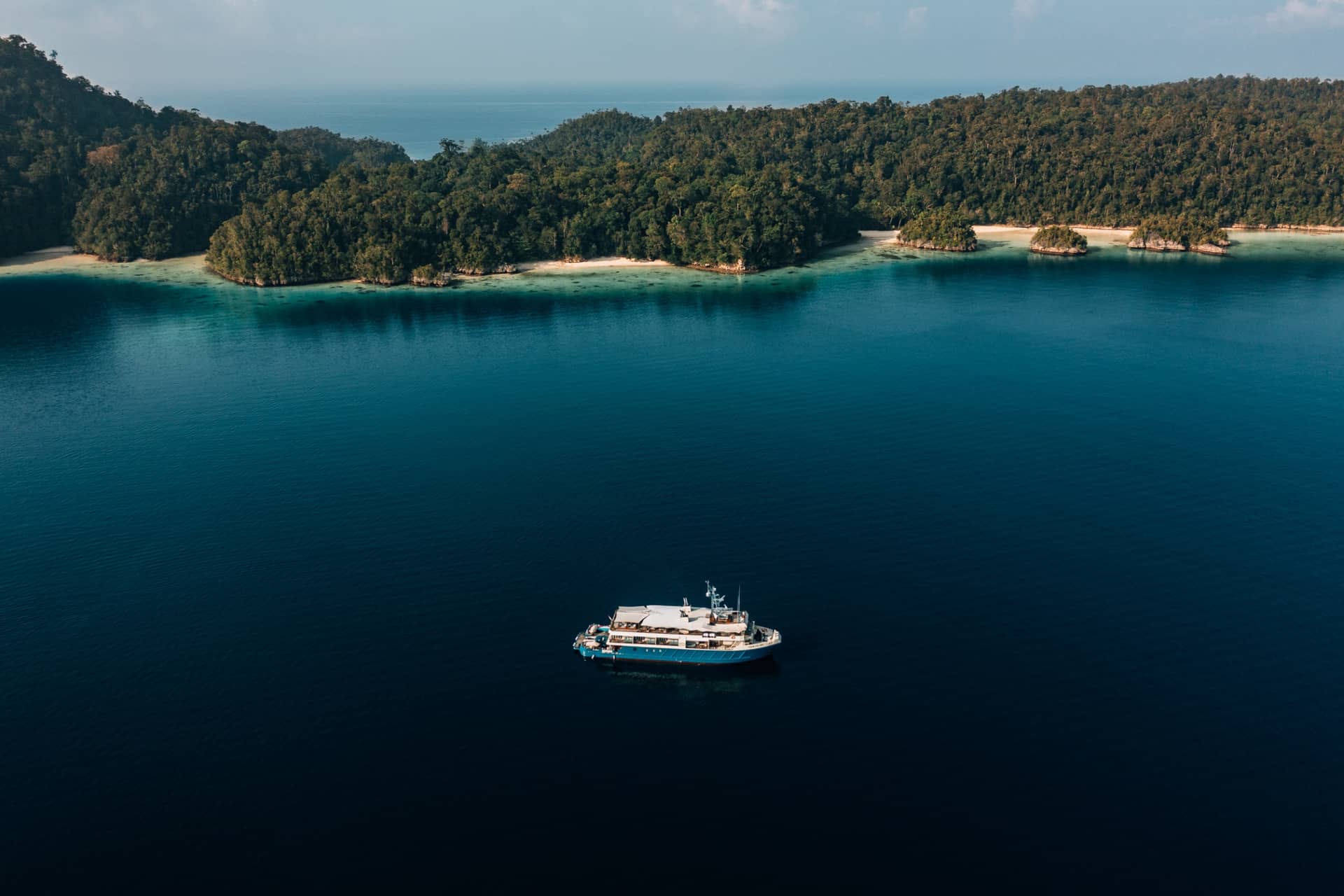
The first thing to understand is the geometry. The Banda Islands sit in the middle of the Banda Sea, roughly 130 kilometres south of Seram and a full open-water crossing from Ambon, the regional gateway. There is no chain of sheltered anchorages leading out to them and no coastline to follow — you leave Ambon, you cross, and some hours later a volcano appears. That first leg is usually run overnight, and on longer itineraries the far sites add more of the same. Days at sea are not filler; they are the rhythm of the trip. The crew set the boat up for it — meals underway, the aft deck rigged for shade, dive gear stowed for a seaway — and by the second morning most guests have stopped counting hours and started watching the water.
You leave Ambon, you cross, and some hours later a volcano appears.
Banda Neira, and a day ashore
Banda Neira is small enough to walk end to end in an afternoon and strange enough to hold you for a week. Charters anchor off the town beneath Gunung Api, and going ashore is deliberately unhurried: the waterfront promenade, the Dutch merchant houses with their shuttered verandas, Fort Belgica on the rise above with its view straight across the strait to the volcano, and the older Fort Nassau below. In the market you can buy nutmeg and mace grated by hand that morning. Outrigger canoes come and go across the anchorage. There is no resort strip, no rank of tour boats and very little to do in the organised sense, which is exactly the point — the pleasure of a day at Banda Neira is the pace of it.
Nutmeg — the reason any of this exists
These islands were, for most of recorded history, the only place on Earth where nutmeg and mace grew, and that single fact explains the forts, the plantation houses and the fact that European powers fought their way across the world to a group of islands you can barely find on a map. On Banda Besar the groves are still worked, shaded by tall kenari trees, and the old perkeniers’ estates stand among them; walking them with a guide is one of the quieter highlights of any charter here. The strangest chapter — the 1667 treaty in which the Dutch kept the nutmeg islet of Run and handed the English a place called Manhattan — is told properly in our Banda Sea yacht charter guide. Ashore, what stays with you is smaller: the smell of the drying racks, and how ordinary it all looks now.
Gunung Api — the dawn climb and the lava flow
Gunung Api rises around 640 metres straight out of the sea beside the anchorage, and it is the signature image of the Bandas from every angle. Fit guests climb it at first light, which takes a couple of hours up loose volcanic ground and repays the effort with the whole archipelago laid out below. Beneath the surface, the north side of the cone carries the trip’s most extraordinary dive: the lava flow from the 1988 eruption, now grown into one of the fastest-recovered and most vivid hard-coral gardens anywhere. It is a living demonstration of how quickly this sea heals, it is shallow enough that snorkellers see it as well as divers, and it is the site guests talk about afterwards more than any wall.
The diving — walls, blue water and the far sites
The Bandas are, above all, a diving ground, and their character is clarity. There is no river within hundreds of miles, so the water is clean and the walls drop from shallow reef straight into deep blue. The reefs off Banda Neira and Banda Besar are easy and rewarding; the outer islands of Ai and Hatta hold the celebrated walls, dense with fusiliers and snapper. Further out, the remote seamounts and the volcanic islet of Manuk belong to longer itineraries and settled seas, and are where the pelagic hopes of a Banda trip live. Currents on the outer sites can be serious, so vessels here carry an experienced dive guide and brief carefully. Snorkellers are genuinely well served rather than tolerated: the Lava Flow and the shallow reefs off Ai and Hatta are vivid straight off the back of the tender.
There is no river within hundreds of miles, so the walls drop from shallow reef straight into blue.
How long you need, and why nothing shorter works
Seven to eleven nights. That is not a sales figure, it is arithmetic: the crossing consumes the best part of a day at each end, which leaves a five-night charter with three usable days among the islands. Seven nights gives you Banda Neira and Gunung Api, the nutmeg islands of Banda Besar and Run, and the walls of Ai and Hatta at an unhurried pace. Ten or eleven adds the far seamounts and Manuk, the sites that need both time and a settled sea. Anyone tempted to compress the trip should look instead at a ground built for shorter charters — Komodo works from three nights precisely because the park is compact, as our Komodo length guide sets out. The Bandas do not compress.
How it combines — Komodo, Alor and the run to Raja Ampat
Very few vessels sit in the Banda Sea waiting for guests. They pass through it, because the Bandas lie on the repositioning route across eastern Indonesia, and a Banda leg is usually one movement of a longer voyage. In spring the pattern tends to run eastwards out of Komodo, often by way of the Alor archipelago and its currents and villages, before the crossing north-east. In autumn it tends to run the other way, with the Bandas as the last act before a boat carries on to Raja Ampat for its October-to-April season. This is why the two windows fall where they do, why the calendar is fixed so far ahead, and why combining grounds is the natural way to charter here rather than an upgrade. The full seasonal logic is in our guide to when to sail the Banda Sea.
Life aboard
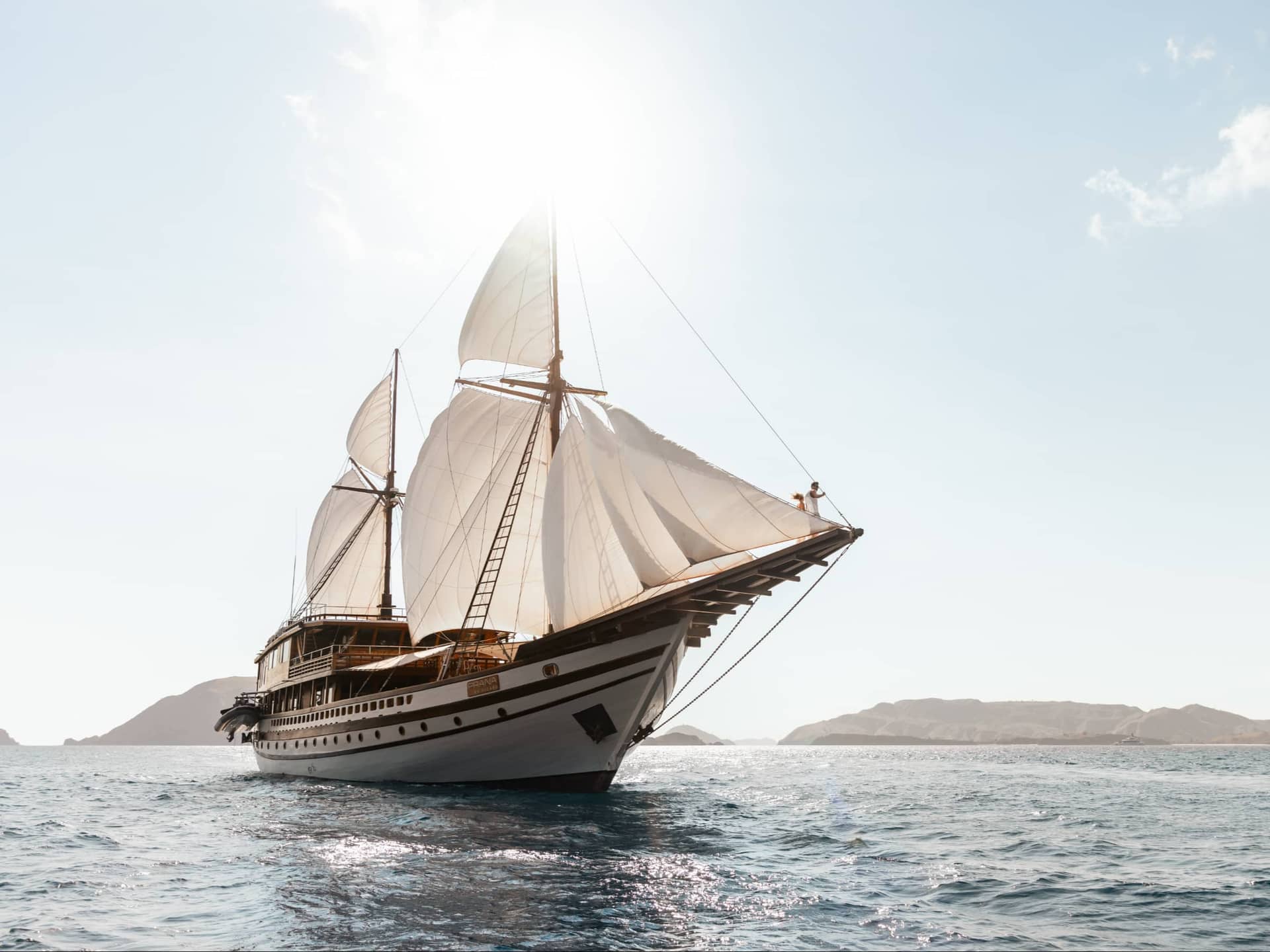
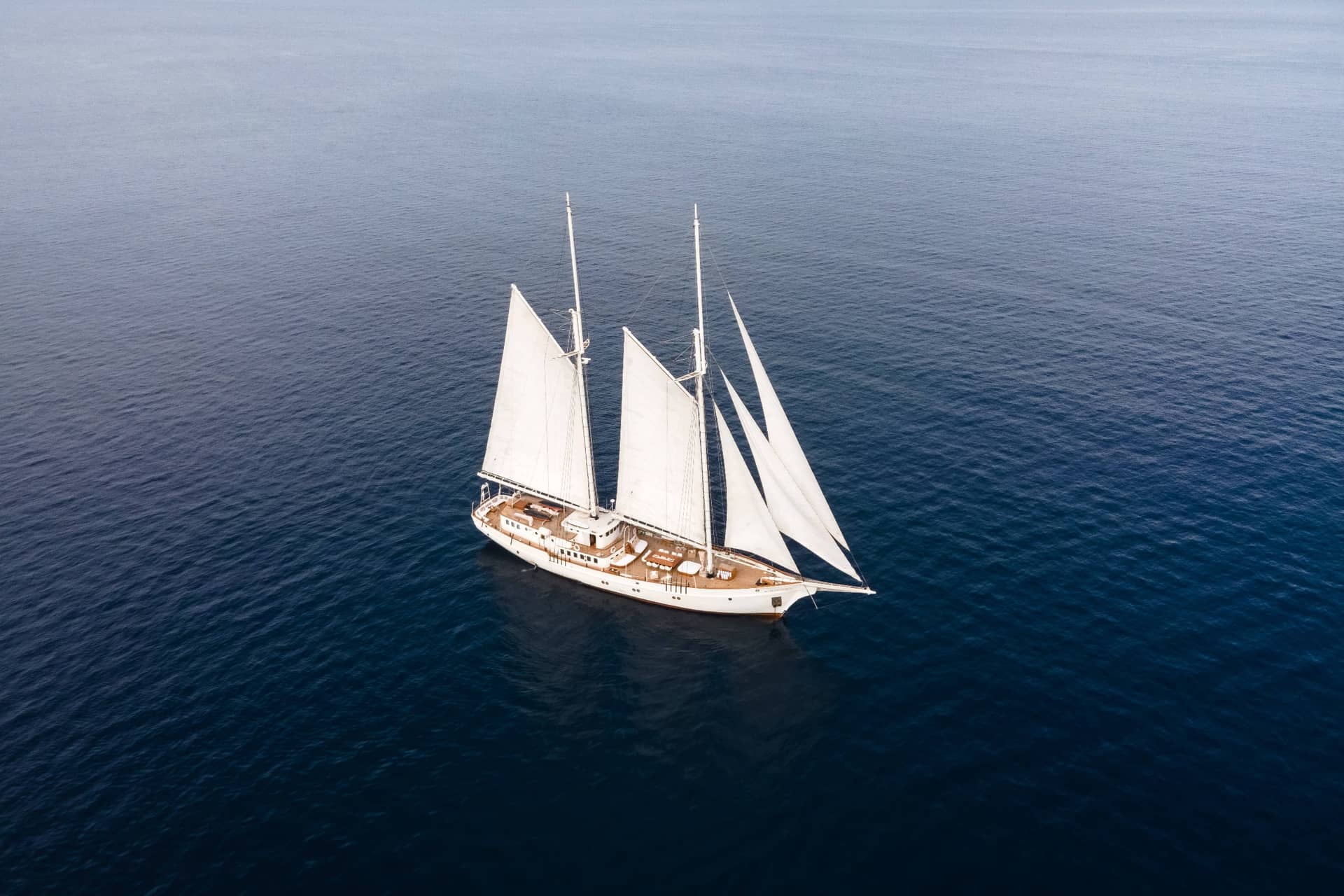
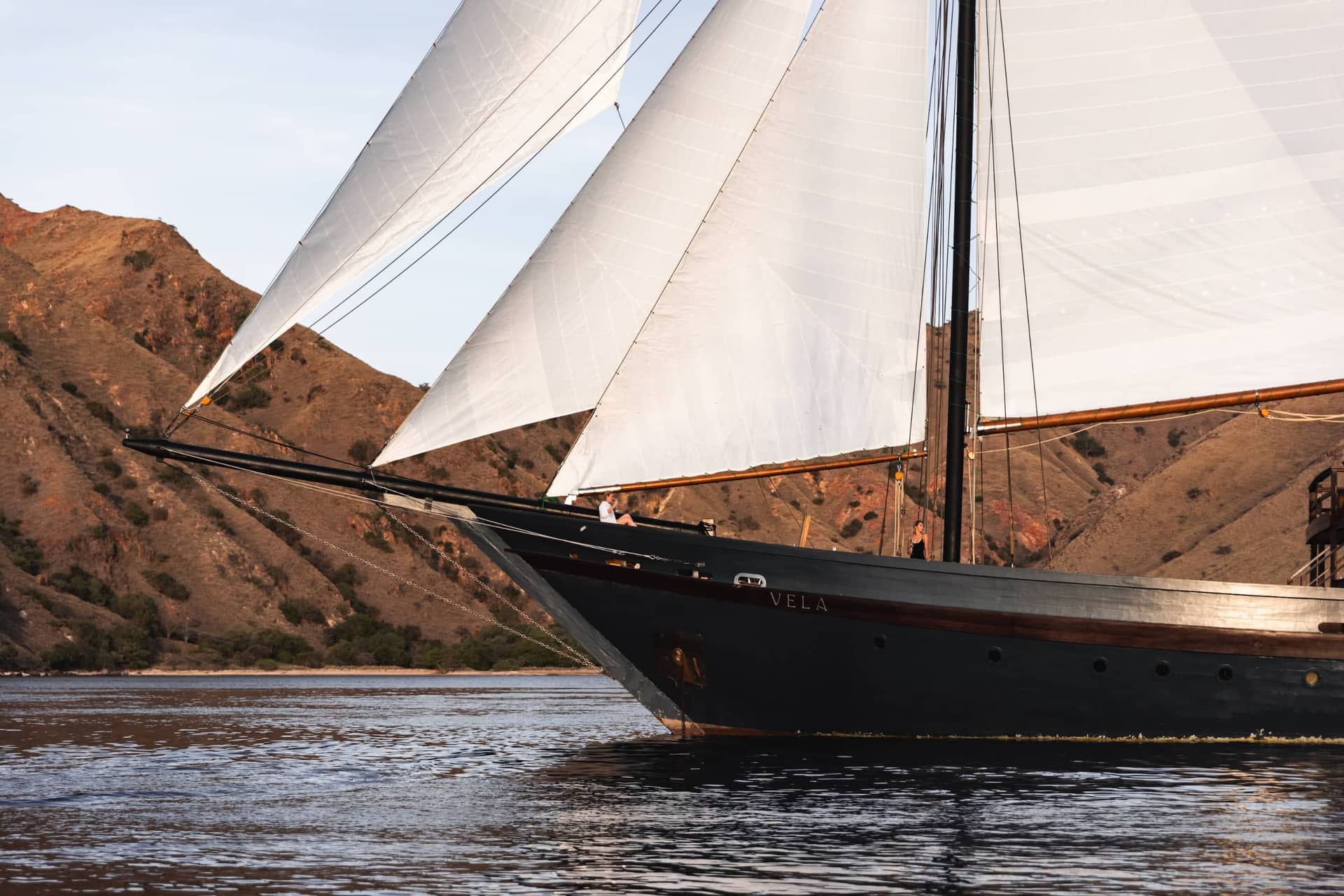
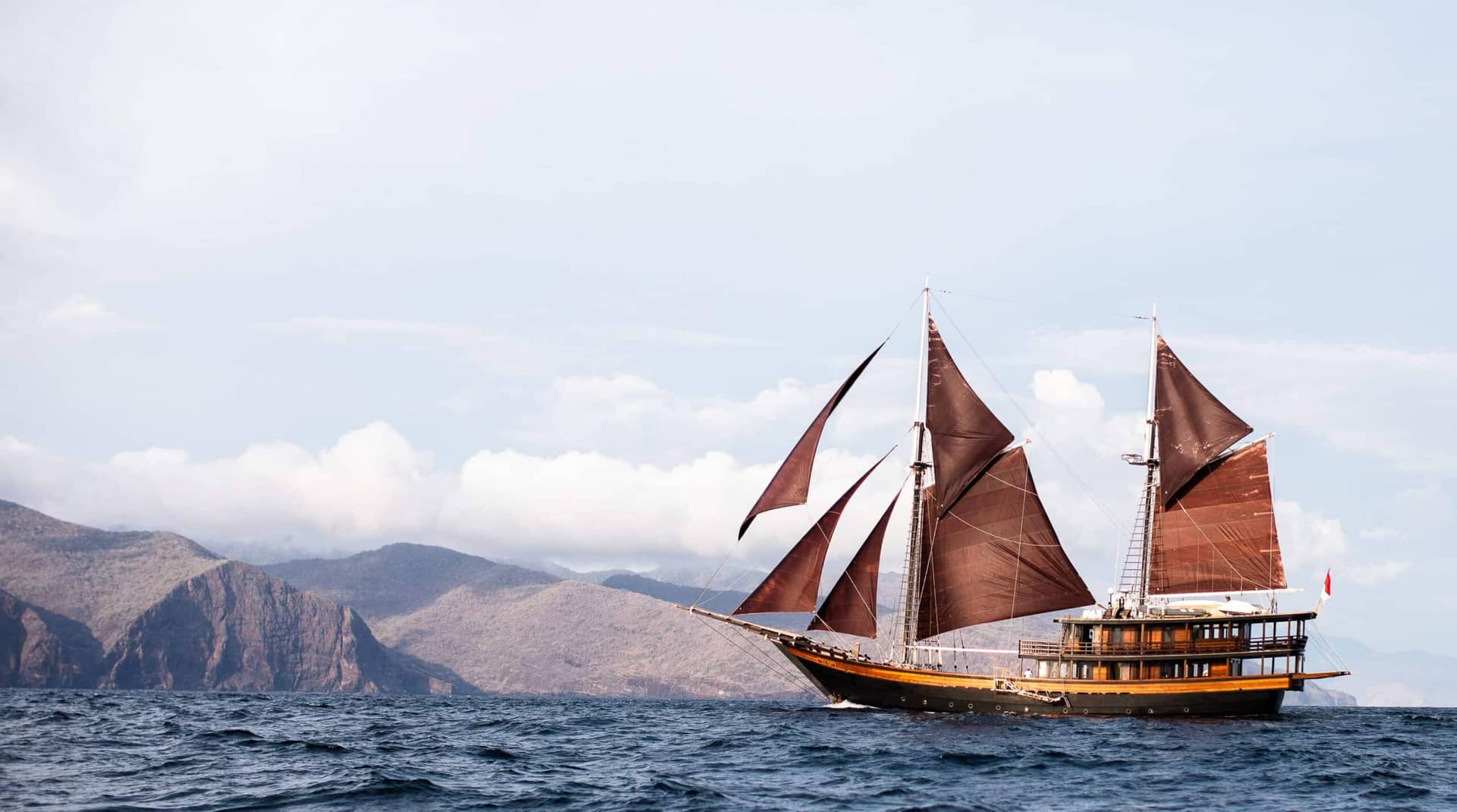
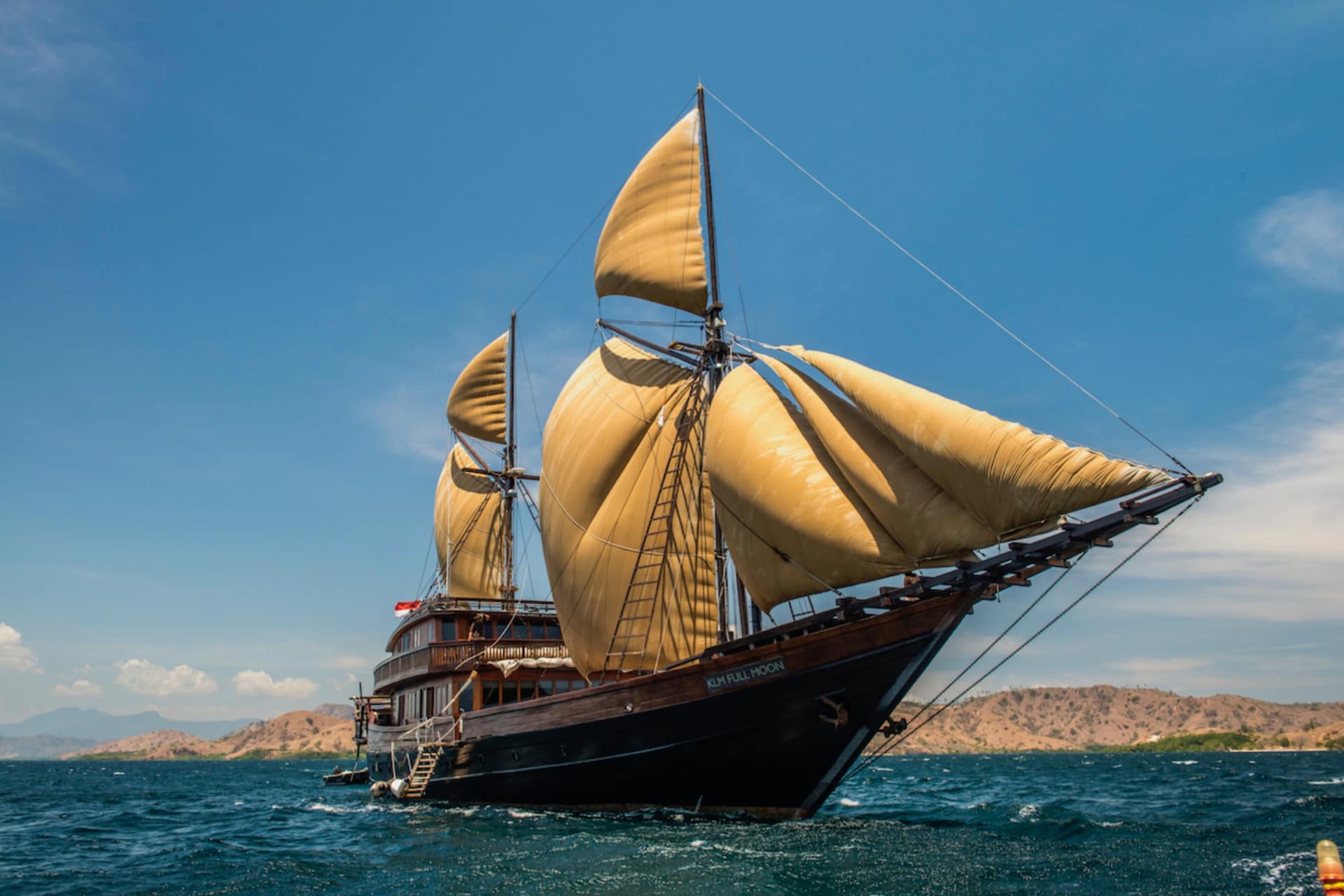
Vessels that run the Bandas are crewed phinisi and expedition yachts built for open-water passages and multi-day diving — a chef, a dive guide, tenders, a compressor, and the range to stay out for a week or more without resupply. Guest numbers are small, so the boat is quiet and the crew know how everyone takes their coffee by the second day. Practically: connectivity is limited and varies a great deal by vessel, so plan on being largely offline; bring whatever medication you rely on rather than expecting to find it ashore; carry some cash for the market at Banda Neira; pack a thicker exposure suit than the tropics suggest, because the Banda Sea can be surprisingly cold on the deeper sites; and reef-safe sunscreen. What each vessel includes — meals and crew always, but fuel, permits, park fees, premium drinks and dive extras vary — is set out in writing before anything is paid.
What it is not, and how to book it
A Banda charter is not a beach holiday with diving attached. There is no nightlife, the anchorages are remote, the passages are long, and the weather has the final say on the route — a good captain will move a plan without apology when the sea asks him to. That honesty cuts both ways: for the right party this is the finest trip in Indonesia, and for the wrong one it is a long way to go to be uncomfortable. If you know which you are, the process is straightforward. Choose a vessel that runs the Banda Sea in your window and send an enquiry; nothing is charged and no card is taken at that stage. Once the boat is confirmed genuinely free, the captain can hold your dates for up to fourteen days while the route is set, and the rate, inclusions, deposit and cancellation terms — all of which vary by vessel — are put in writing in the charter agreement.
For the right party this is the finest trip in Indonesia. For the wrong one it is a long way to go to be uncomfortable.