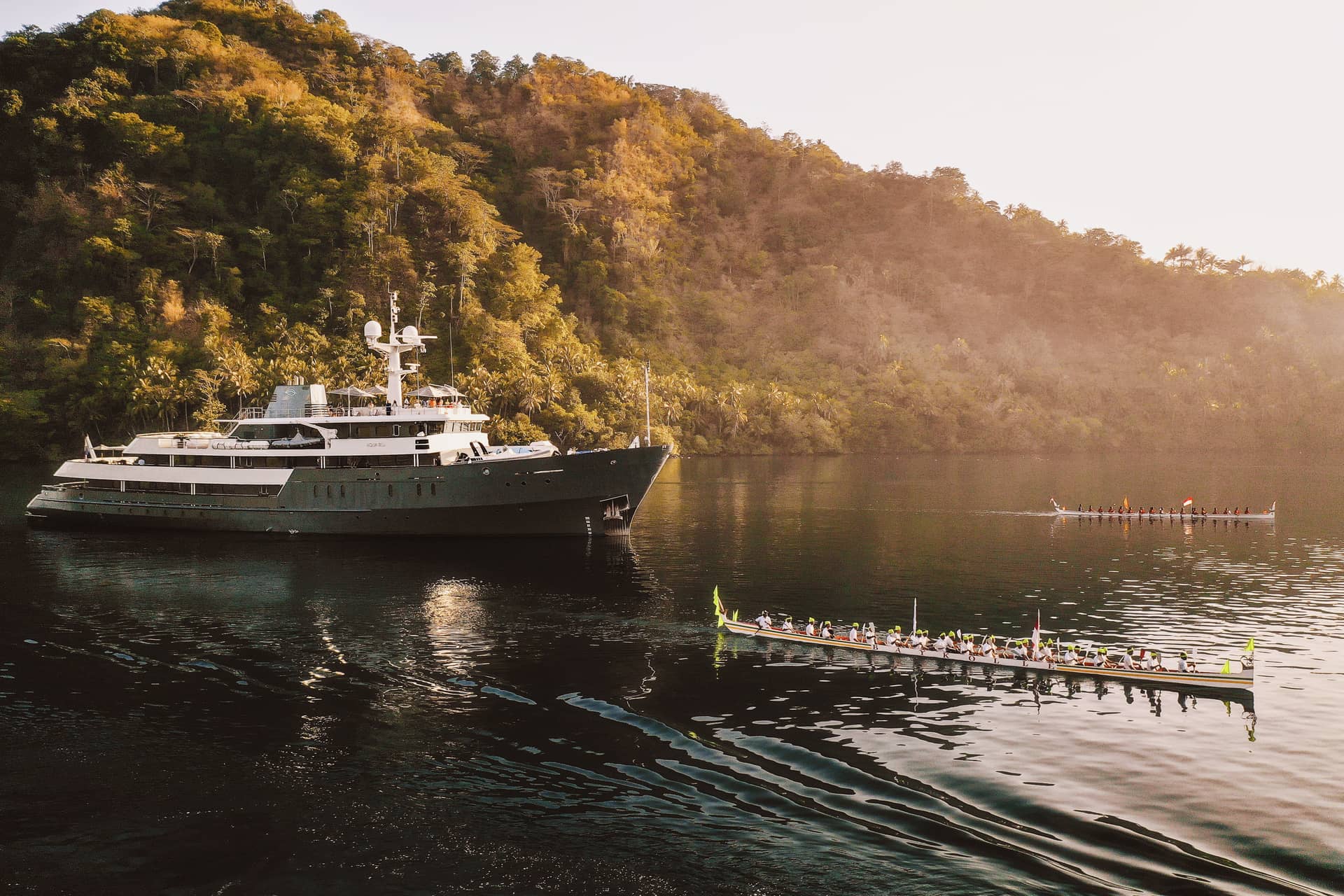
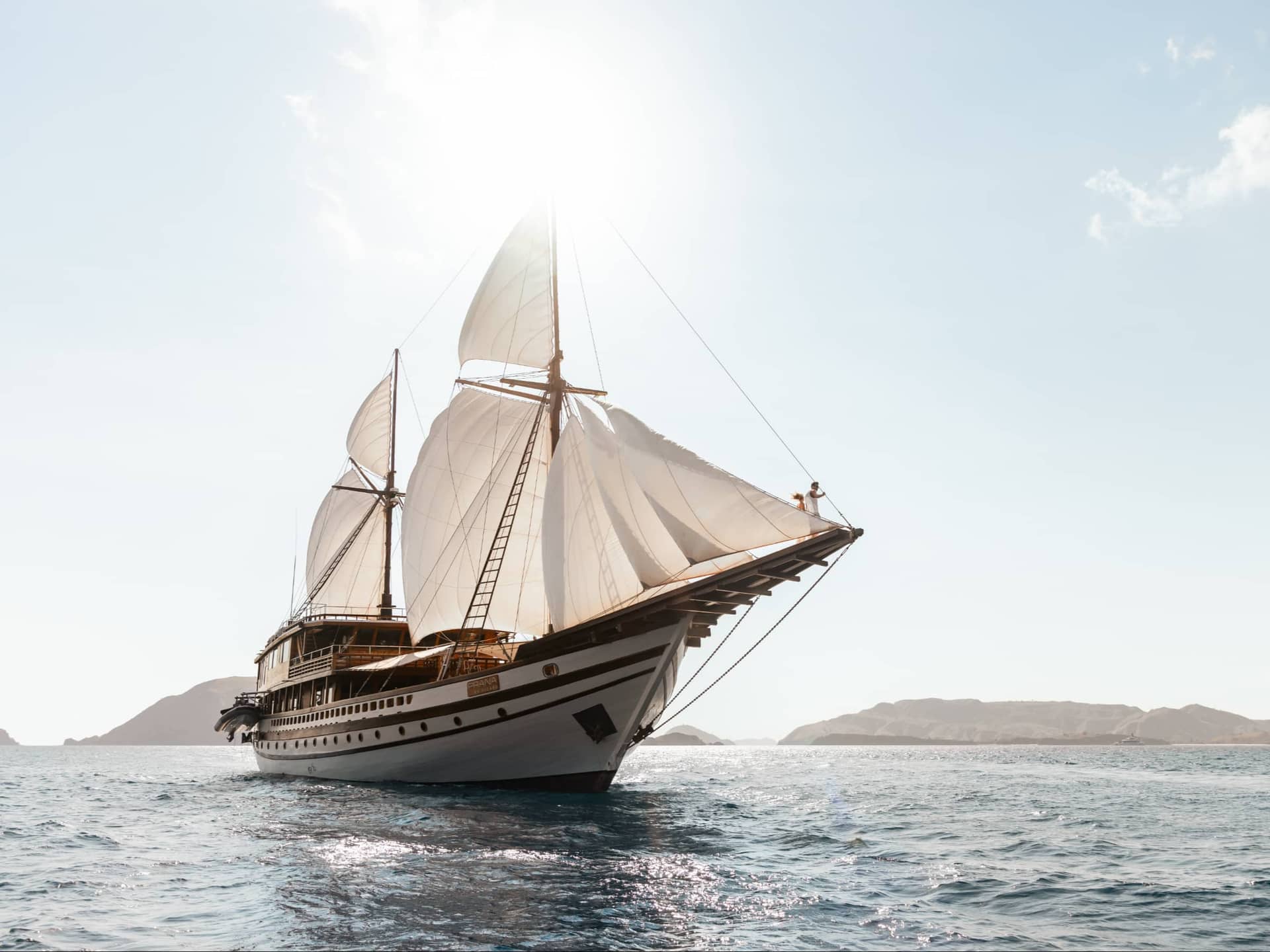
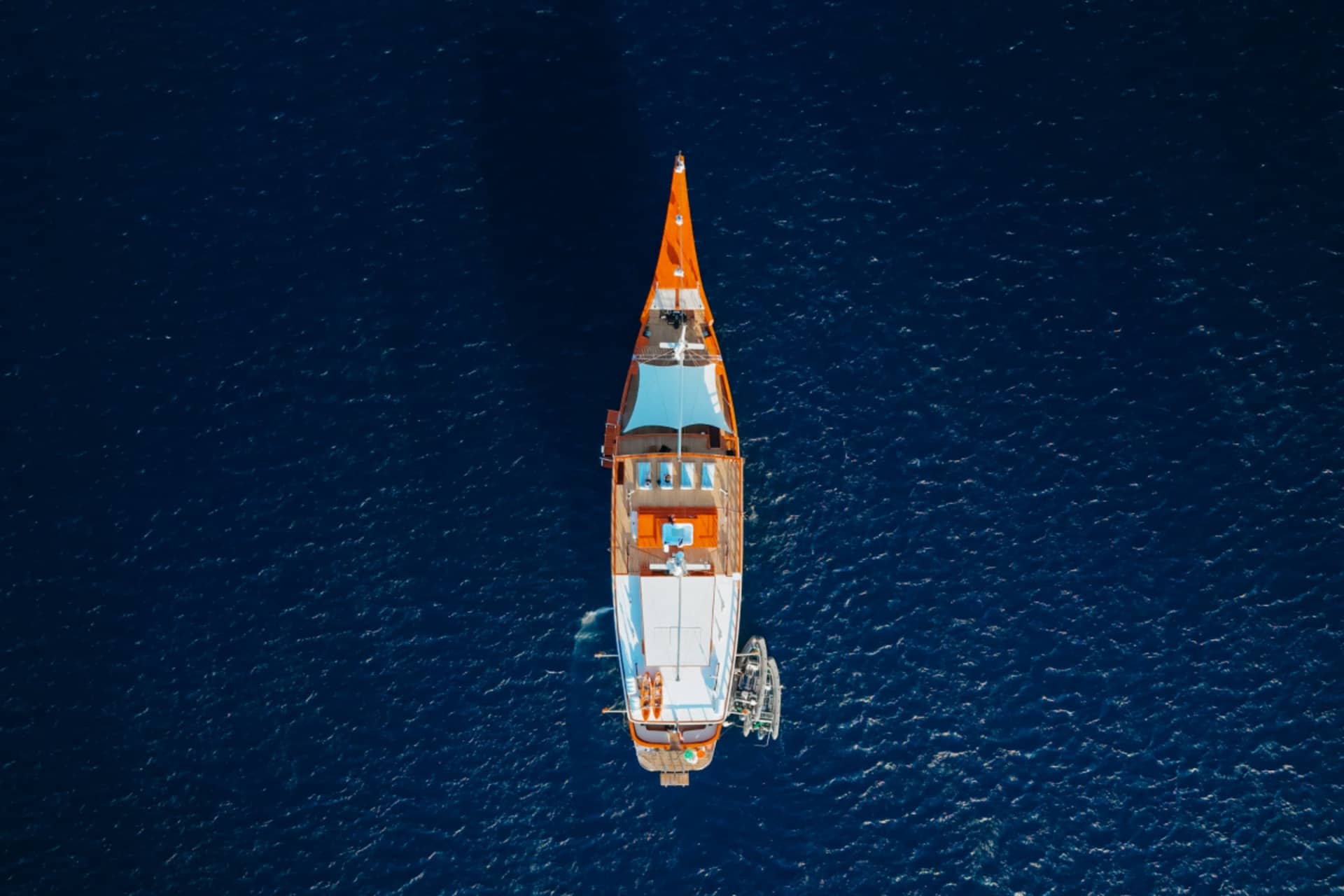
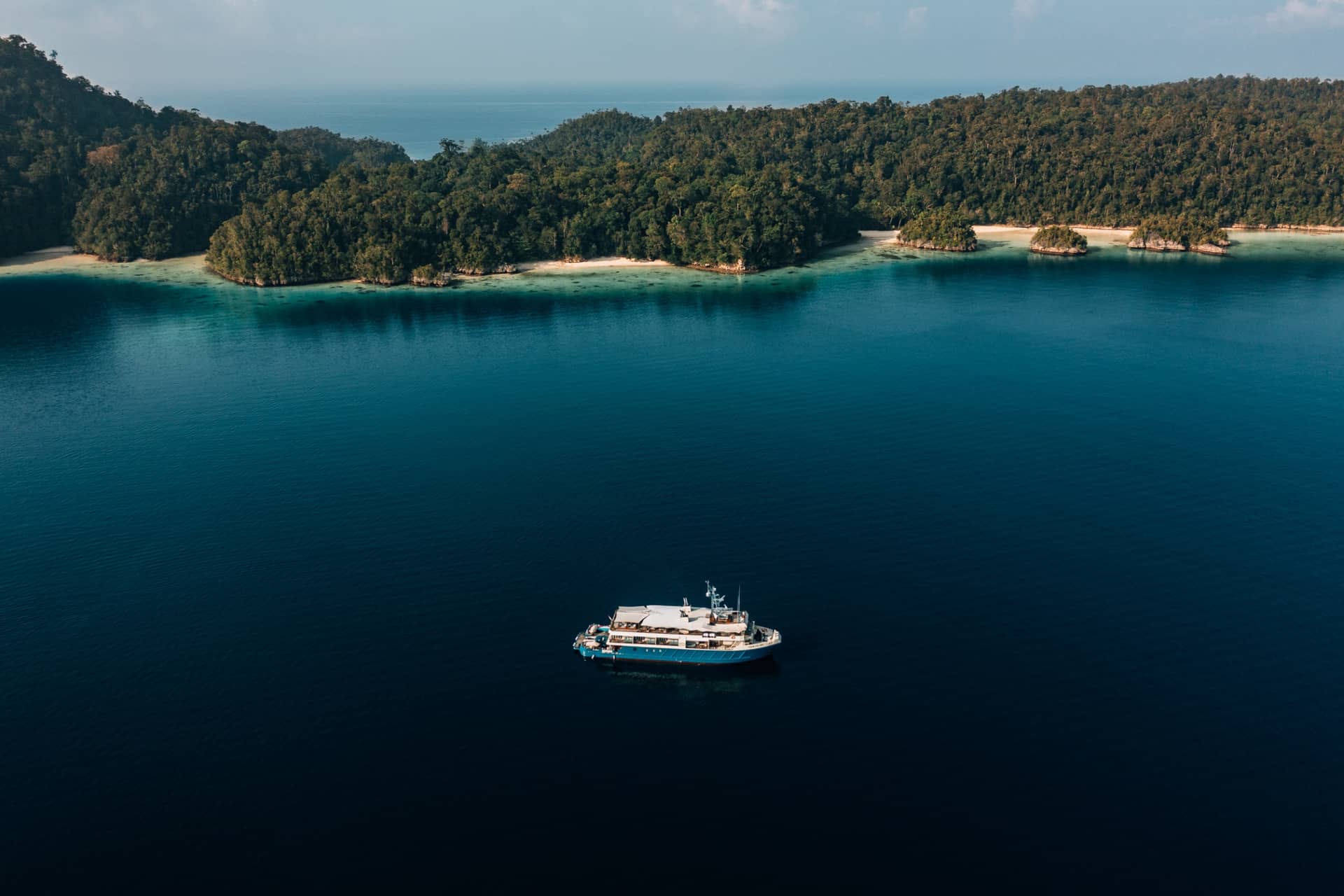
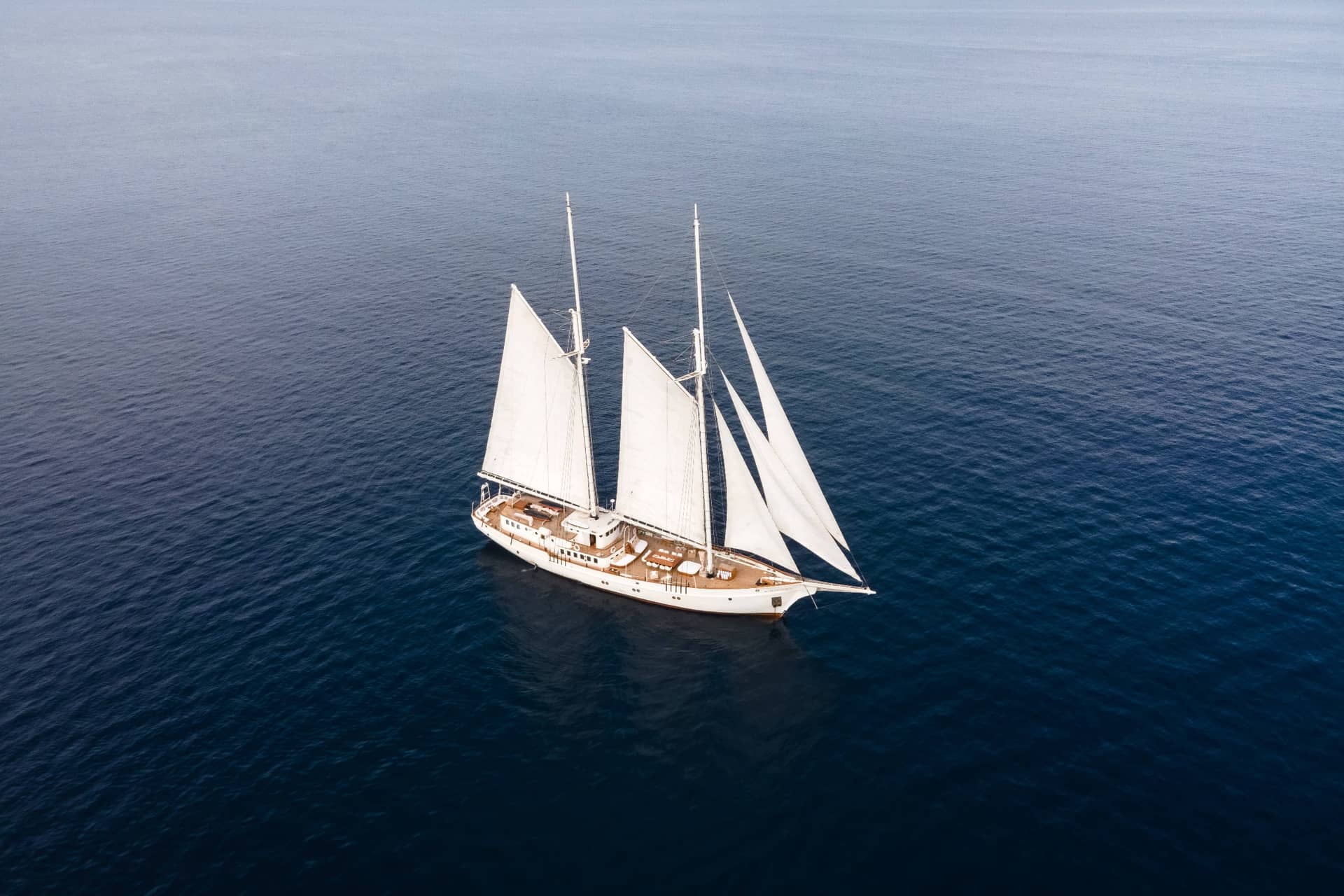
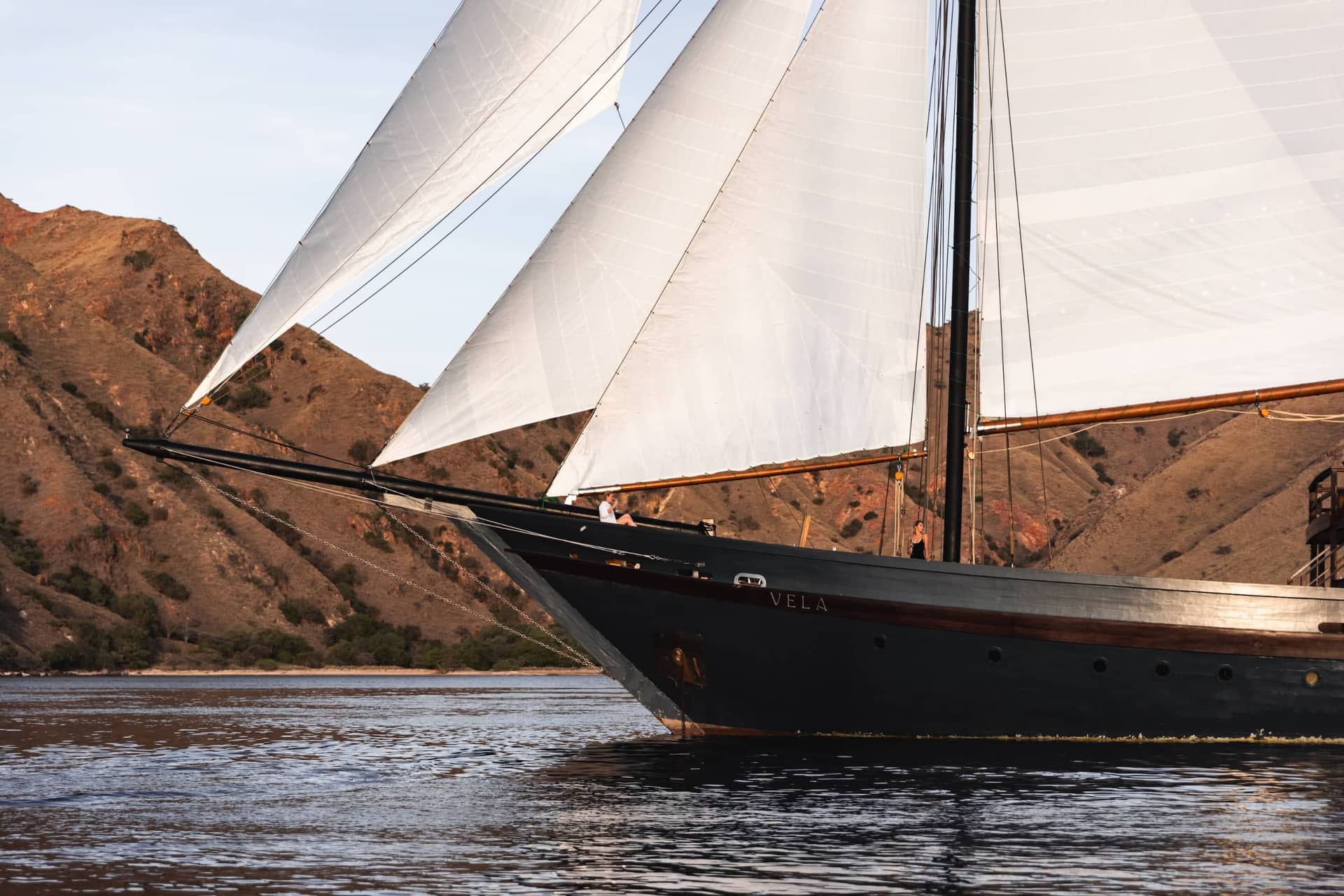
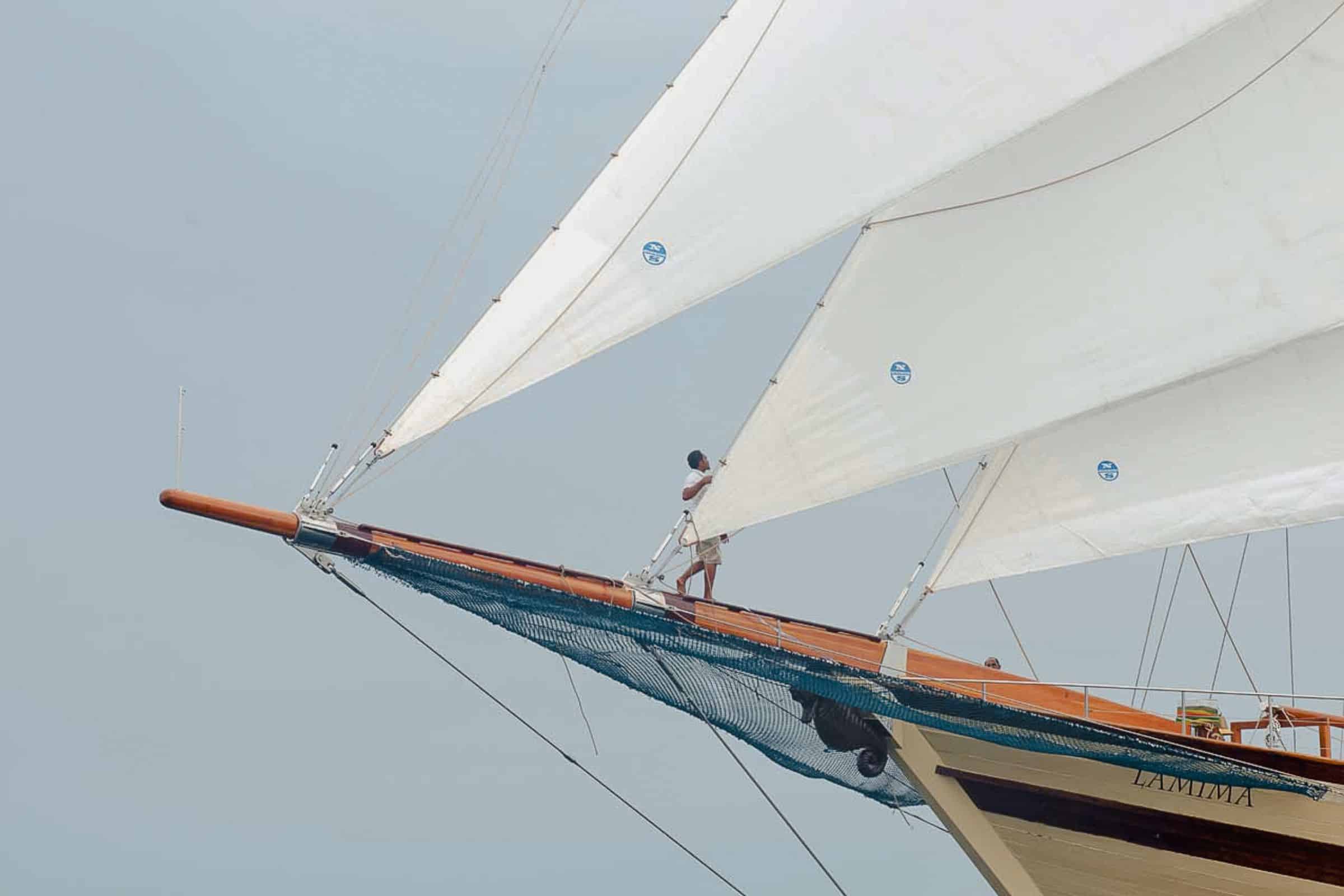
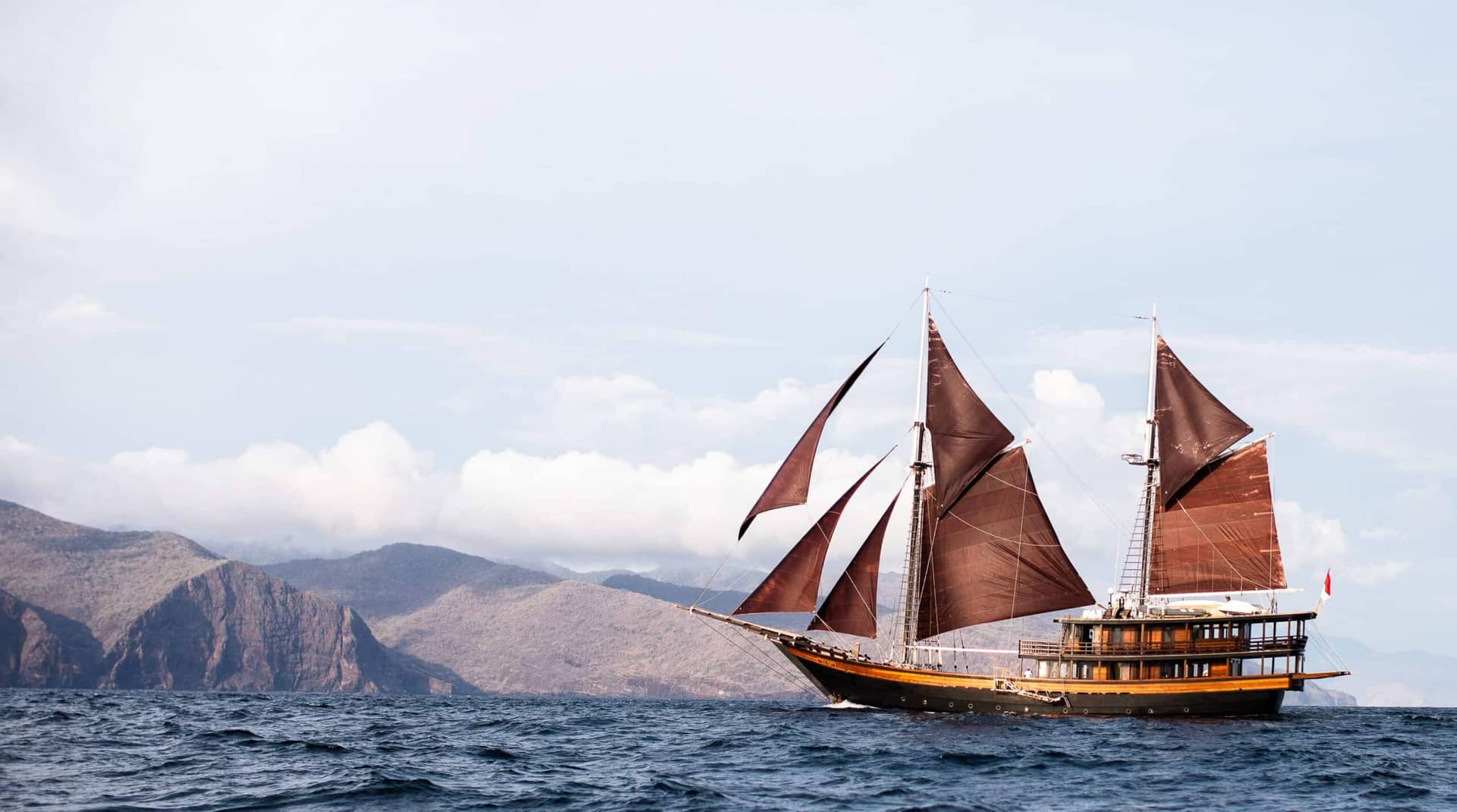
Raja Ampat — “the Four Kings” — is a remote archipelago off the north-west tip of West Papua, and by most measures the most biodiverse marine region on the planet. More than a thousand islands and cays of mushroom-shaped karst rise from impossibly clear water; beneath the surface, the reefs hold more fish and coral species than anywhere yet surveyed. It is far, with few resorts and long distances between sights, which is exactly why it is liveaboard country: a private phinisi is the only way to reach Wayag, Misool and the open-ocean dives in a single trip. This is the complete guide to a Raja Ampat yacht charter — the islands, the diving, which vessel and when to go.
Explore the Raja Ampat fleet →
Raja Ampat by private yacht
The gateway is Sorong, on the Papuan mainland, reached by air from Jakarta, Makassar or Manado; from there it is a short hop to Waisai on Waigeo and the charter grounds. The archipelago spreads across a vast area — the northern karst of Wayag and Piaynemo, the central reefs around Dampier Strait, and the wild south of Misool — with hours of open water between. There are very few places to stay and even fewer roads, so almost everyone explores by liveaboard: a crewed phinisi with dive guides, tenders and a chef that moves between sites overnight. It is the definition of a private-yacht destination.
A private phinisi is the only way to reach Wayag, Misool and the open-ocean dives in a single trip.
Piaynemo & Wayag: the karst archipelagos
The image everyone knows is Piaynemo — a short climb to a viewpoint over a lagoon studded with green mushroom islets, the postcard of Raja Ampat. Further north, Wayag is the grander, wilder version: a labyrinth of karst cones you explore by tender and on foot, climbing for the famous panorama and kayaking the hidden lagoons. Between them lie quiet anchorages, white-sand cays and the small island village of Arborek with its jetty famous for resident mantas. Above the water Raja Ampat is jade and limestone; below it is something else entirely.
Diving the richest reefs on Earth
This is one of the world’s premier dive destinations. In the Dampier Strait, sites like Cape Kri hold the record for the most fish species counted on a single dive, while Blue Magic and Sardine Reef pull in mantas, sharks and dense schools on the current. Manta Sandy is a dedicated reef-manta cleaning station; the south, around Misool, adds soft-coral walls and seamounts in some of the clearest water in the archipelago. Snorkellers are spoilt too — the shallow reefs and jetties teem with life. A good vessel plans the route around the tides and the sites you most want.
Misool & the wild south
Two long days’ sail south of the airport, Misool is for many the highlight — a roadless wilderness of karst lagoons, hidden beaches and ancient rock-art panels painted on the cliffs, ringed by reefs that have been protected as a marine reserve for over a decade. The diving here is softer and more colourful, the islands more dramatic, the sense of remoteness complete. Reaching it needs a vessel with the range and the nights to spare, which is why Misool is the preserve of the longer liveaboard charter.
A roadless wilderness of karst lagoons, hidden beaches and ancient rock art.
Which yacht, and how long
Raja Ampat is chartered almost entirely on liveaboard phinisi and luxury yachts — crewed, with dive guides, compressors, tenders and a chef. Because it is remote and the sights are spread wide, trips run longer than elsewhere: seven nights is a sensible minimum to take in the north and the central reefs, and ten or more to add Misool in the south. Pricing is per night, per boat, and varies widely by vessel and itinerary, so compare each yacht’s rate on its page or send an inquiry for a tailored quote.
When to go, and how to get there
The prime season is roughly October to April, when the seas are calmest and visibility is at its best; the manta season around Dampier peaks within this window. May to September is windier in the north, though the south can still be excellent. Getting there means flying to Sorong (via Jakarta, Makassar or Manado), then transferring to Waisai or boarding your vessel directly. Marine-park entry fees apply and are arranged by the crew. To book, choose a yacht and send an inquiry — our desk confirms availability, the route and the price before anything is paid.