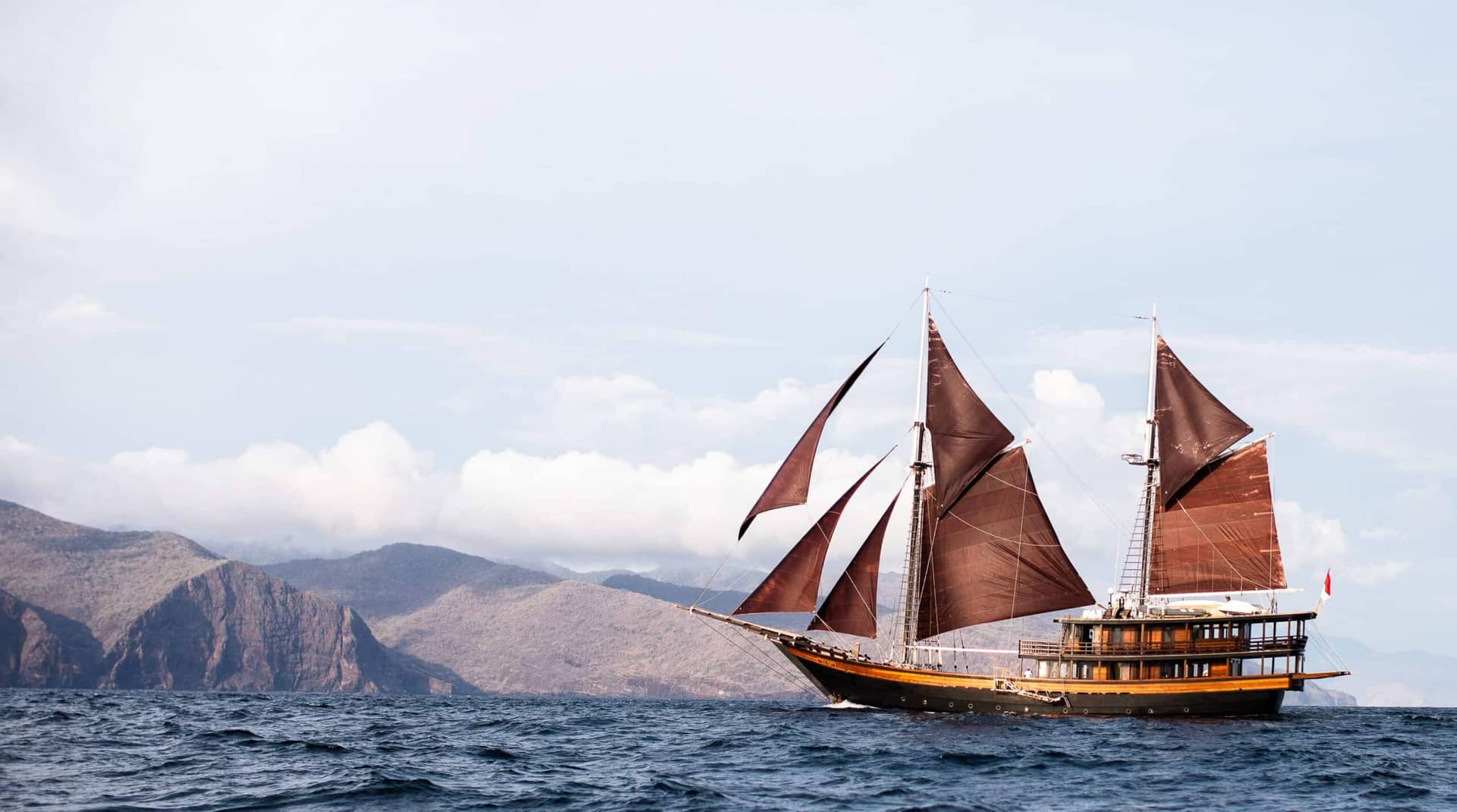
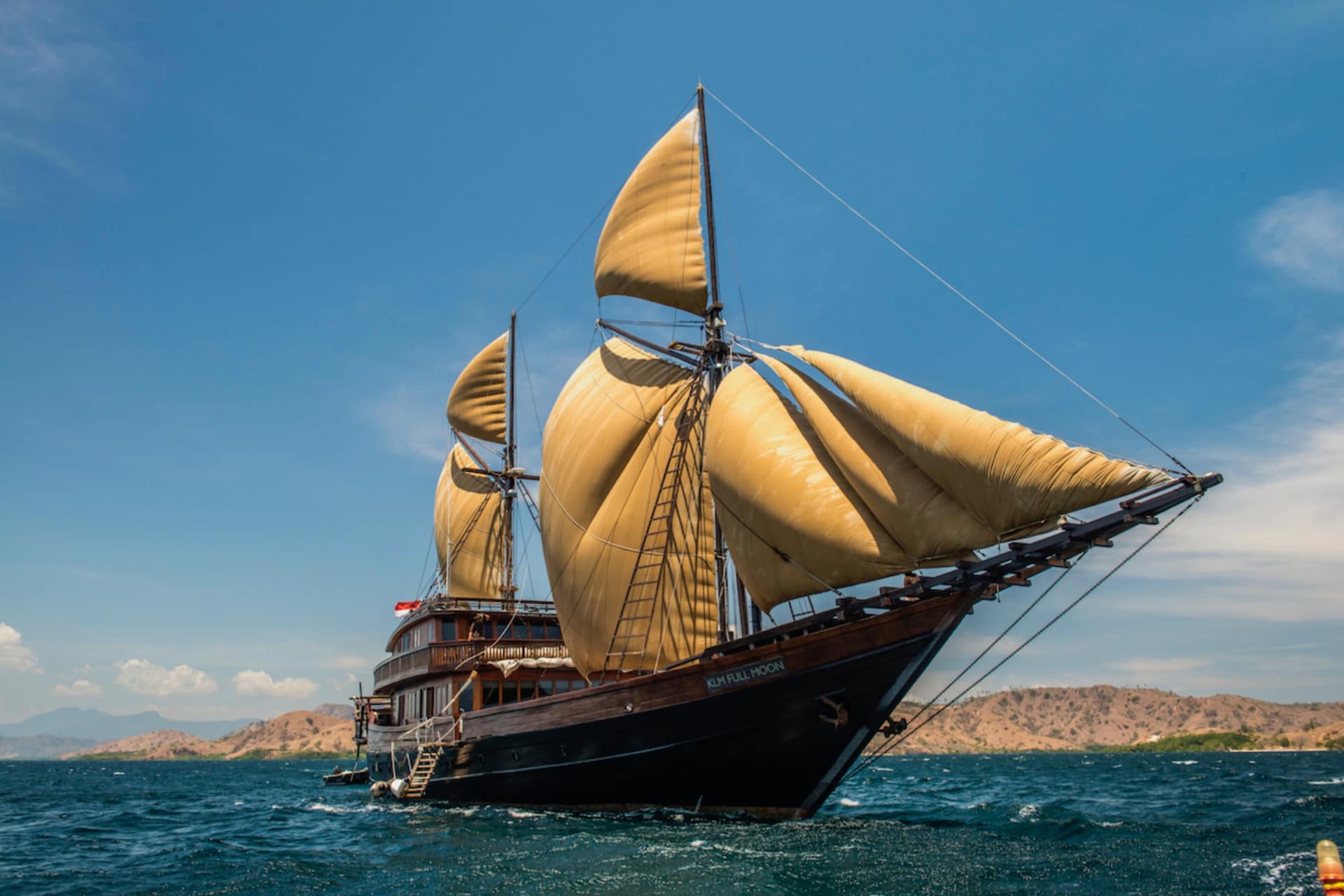
Indonesia has an unusual superyacht fleet. Alongside the modern expedition motor yachts you would find in any cruising ground sits something you would find in no other: the great phinisi, two-masted sailing vessels built by hand in teak and ironwood on the beaches of South Sulawesi, the largest of them among the biggest wooden sailing yachts in the world and fitted out to a standard that would not embarrass a Mediterranean flagship. Both families work the same waters — Komodo, Raja Ampat, the Banda Sea, Bali and the Nusa Islands — and both are chartered the same way: the whole vessel, her captain and her crew, taken for a stretch of nights. This is what that means in practice, what the extra metres actually buy, and what it costs, said plainly.
What “superyacht” means here
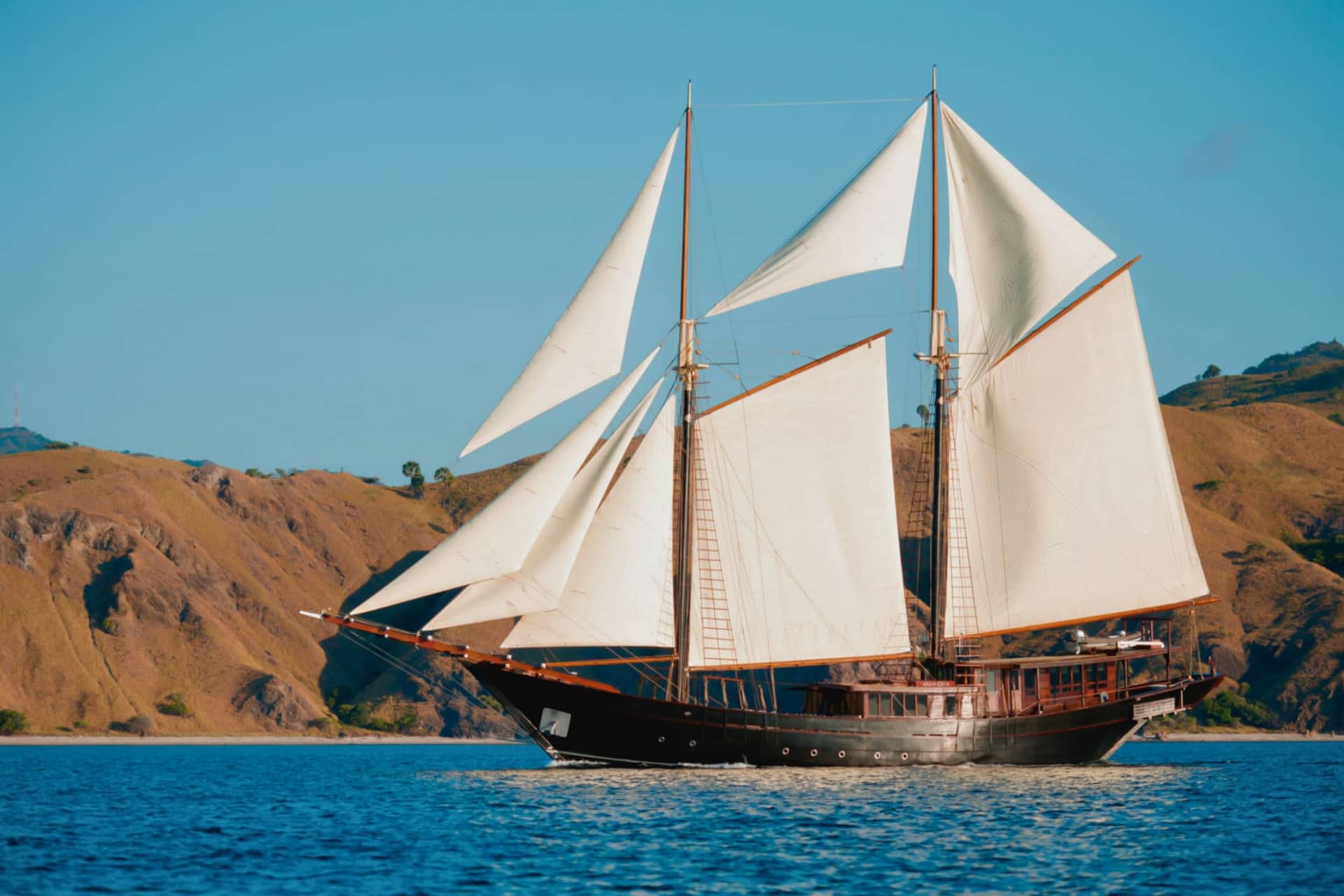
The conventional line is drawn at twenty-four metres, and by that measure a large share of Indonesia’s crewed fleet qualifies. But length alone tells you very little in this archipelago. At the top end sit two quite different kinds of vessel: purpose-built expedition motor yachts, and the grand phinisi — hand-built sailing yachts whose form comes from Sulawesi boatbuilding and whose interiors come from the same designers who fit out yachts anywhere else. A phinisi of fifty metres and a motor yacht of fifty metres will give you very different weeks. Visiting foreign-flagged superyachts also cruise Indonesian waters on cruising permits, though what any individual vessel may do commercially here depends on her flag and paperwork, which we confirm in writing for the specific yacht rather than assume. Whatever the hull, the arrangement is the same: you take the boat entire, not a cabin on it. Our Indonesia yacht charter guide covers the wider fleet and the regions.
You take the boat entire, not a cabin on it.
The large end of the fleet
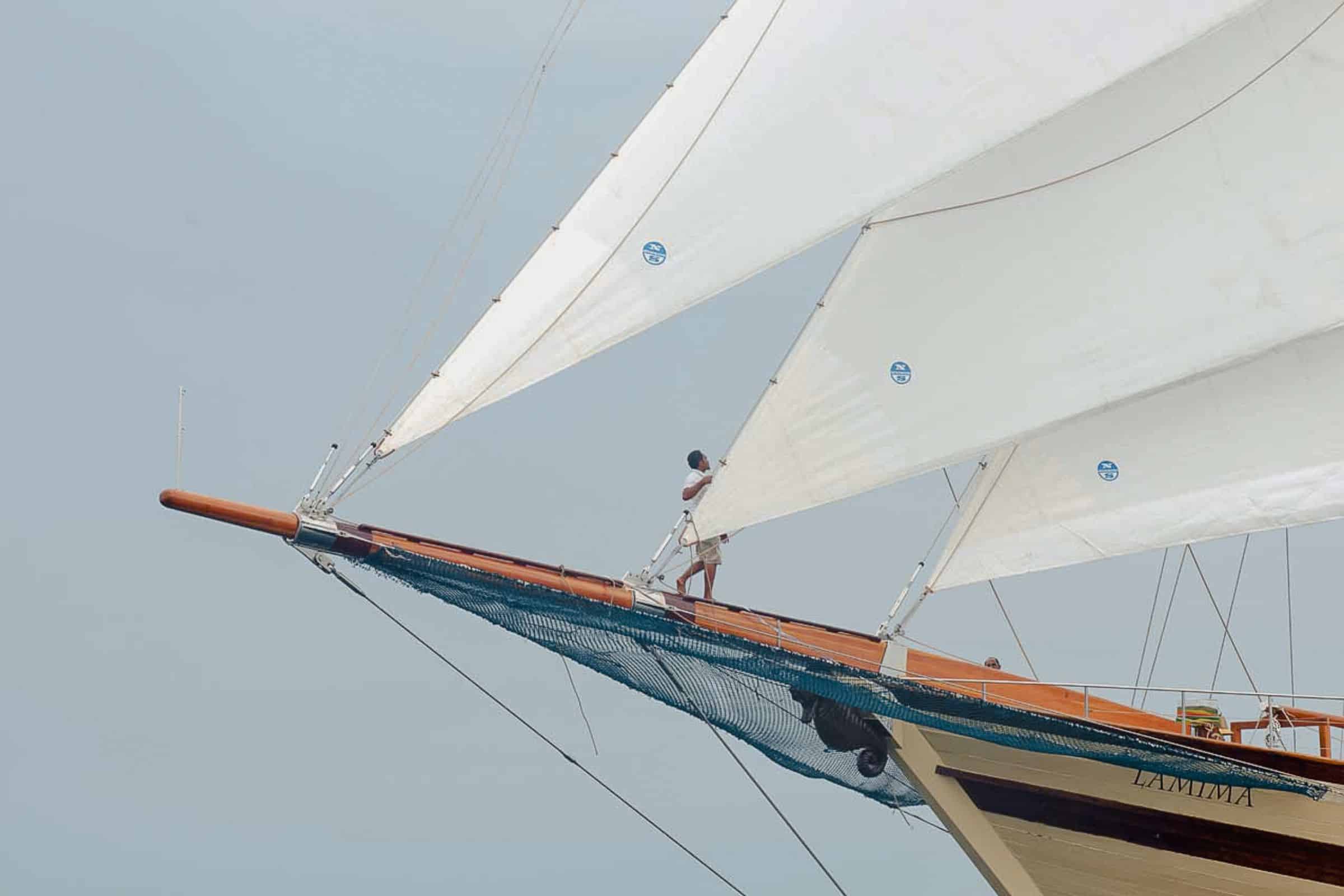
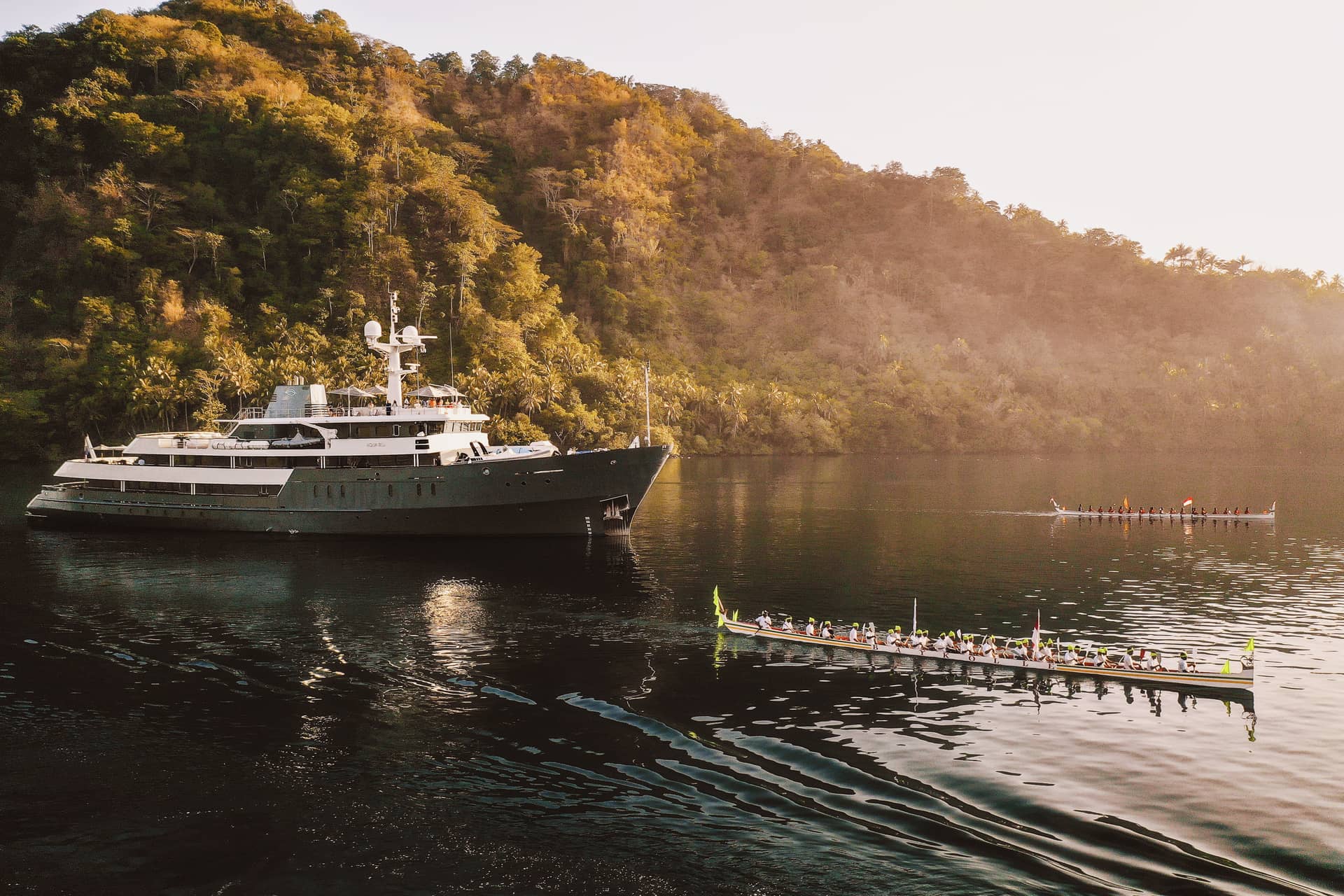
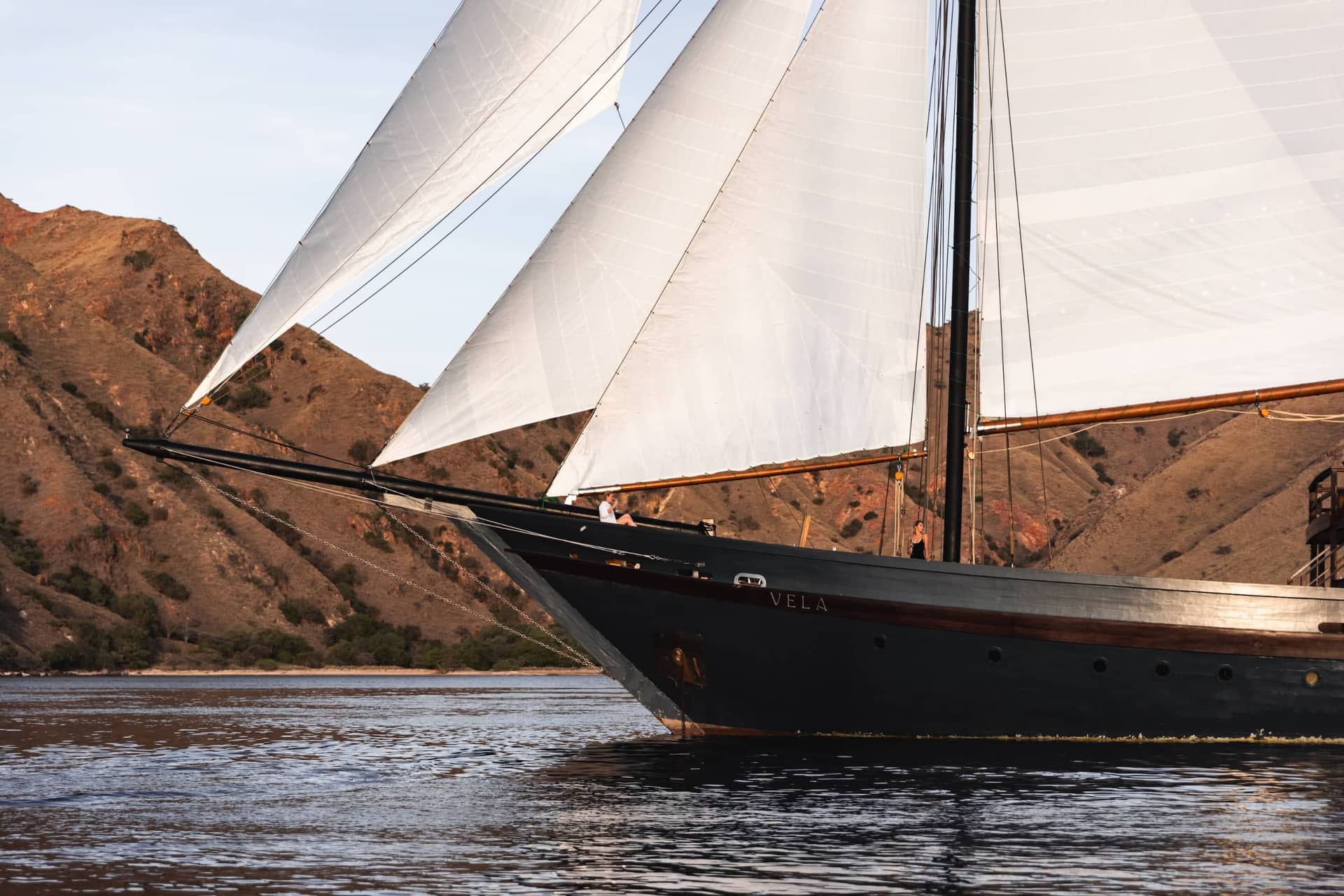
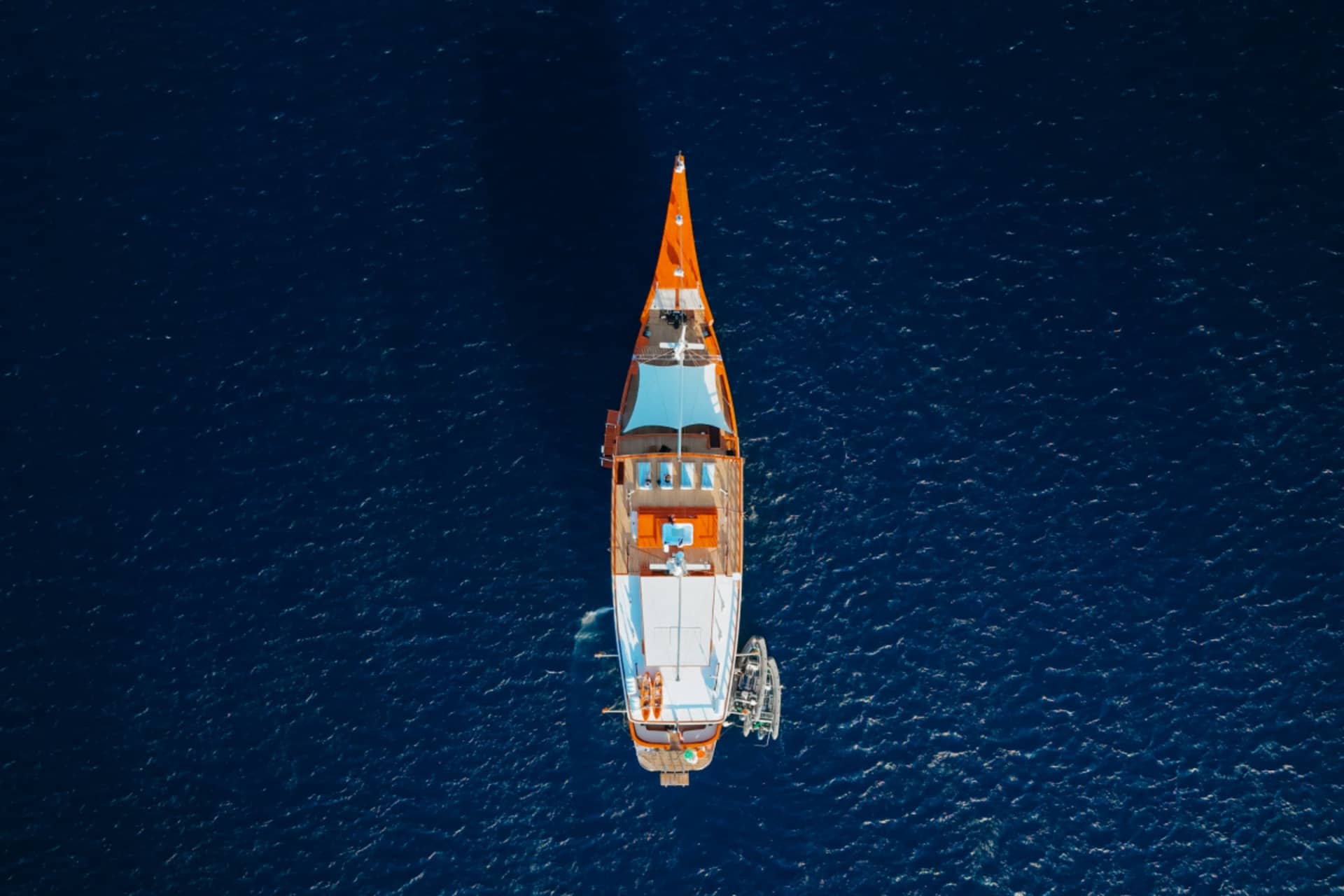
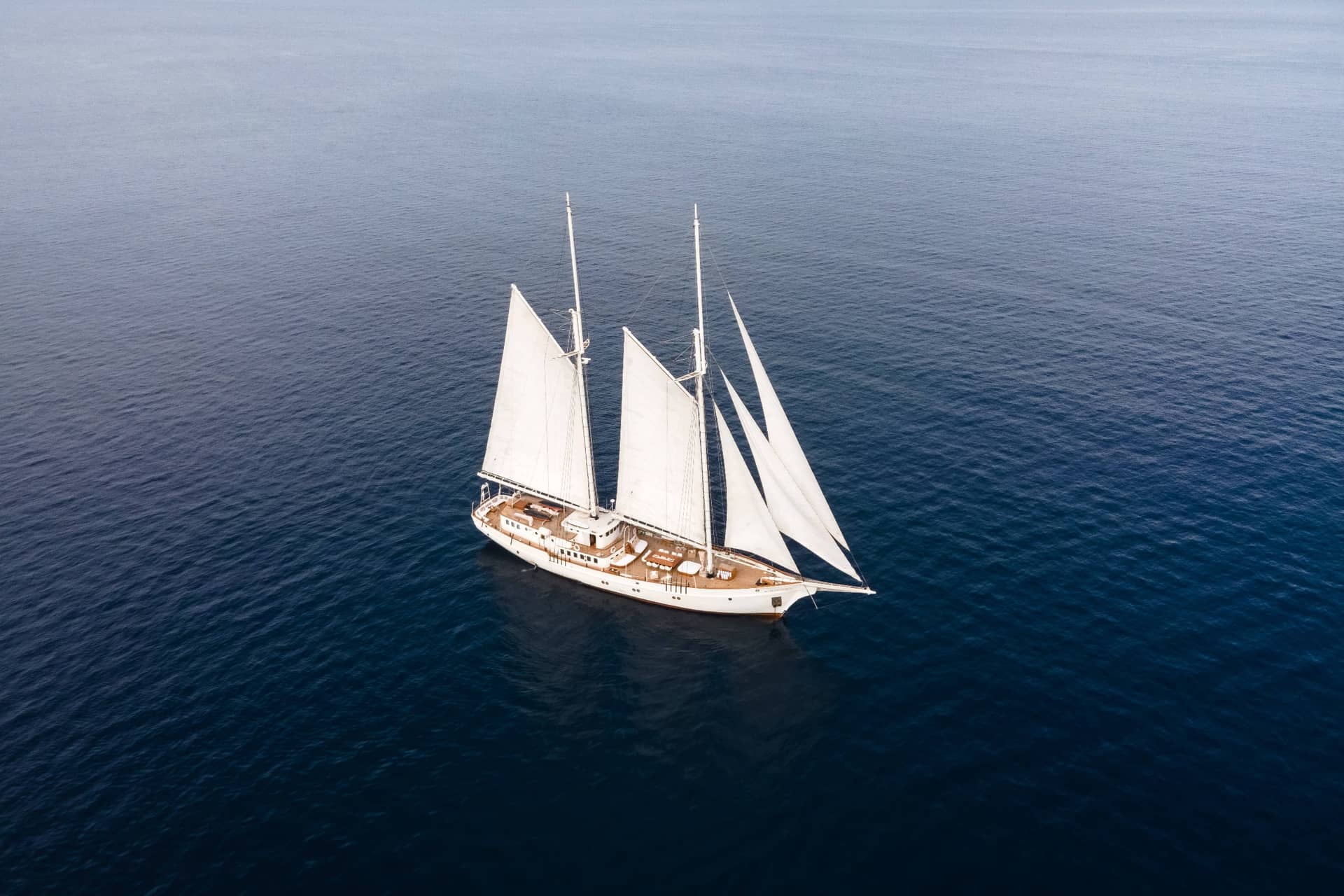
A few vessels give the shape of it. Lamima, at sixty-five metres, is among the largest wooden sailing yachts in the world — seven cabins for fourteen guests, with eighteen crew aboard. Aqua Blu is a sixty-metre expedition motor yacht carrying up to thirty guests across fifteen cabins, with a pool, a spa, a sky-lounge bar and a full dive and watersports deck. Amandira, Aman’s fifty-two-metre phinisi, takes just ten guests in five cabins with a crew of twelve. Vela runs fifty-five metres for fourteen guests; Mutiara Laut and Alila Purnama sit at forty-six metres. The pattern worth noticing is the ratio: on most of these vessels the crew outnumber, or nearly outnumber, the guests. That is the real luxury at this end of the fleet, and it is what a shorter specification sheet never conveys.
What the extra metres actually buy
Not speed — most of this fleet cruises gently, and in Indonesia the boat generally moves while you sleep. What length buys is stability on passage, which matters enormously on the long open-water legs to the Banda Sea; range, so a vessel can stay out for a week or more without resupply; a proper dive operation with compressor, nitrox, divemasters and a tender fleet rather than a single dinghy; a galley and provisioning depth that can carry a chef through fourteen nights far from a market; and deck space that is genuinely usable in both sun and rain. It also buys crew depth, which is the thing guests actually feel: nobody has to organise the day because there are enough people aboard that the day organises itself. What length does not buy is intimacy. A sixty-five-metre yacht taken by six people is a different holiday from a thirty-metre taken by twelve, and neither is automatically the better one.
Nobody has to organise the day, because there are enough people aboard that the day organises itself.
Where the large boats cruise — and where they do not
The main grounds are the same for a superyacht as for anything else, with one qualification. Komodo National Park is the headline, compact enough for a three-to-seven-night charter and reached through Labuan Bajo. Raja Ampat is the richest reef on earth, reached through Sorong and best given a week or more. The Banda Sea is the expedition, open only in two short windows a year. Bali and the Nusa Islands run year-round and are where many voyages begin. The qualification is draught. Larger vessels need deeper water to anchor in and will sometimes lie further off a bay than a small boat would, which makes the tender programme part of the specification rather than an afterthought — one reason the serious yachts here carry several tenders and why the number is worth asking about.
The cost, honestly
Charters here are priced for the whole vessel, not per cabin — overnight yachts by the night, day boats by the day, quoted in the cruising ground’s currency, which in Indonesia means rupiah. Three anchors from our own catalogue give the range at the large end: Aqua Blu at about IDR 147 million a night, Amandira at about IDR 228 million, and the sixty-five-metre Lamima at about IDR 409 million. Smaller phinisi start well below these figures, and every vessel’s exact rate is shown on her own page. The rate, though, is only half the answer. What sits inside it varies genuinely from boat to boat: crew and meals are aboard on every crewed charter, but fuel, cruising permits, national-park and ranger fees, premium drinks, dive courses and some water toys may be inside the rate or quoted alongside it depending on the vessel. Deposit, cancellation terms, insurance and gratuity vary in the same way. There is no fleet-wide figure and we will not invent one — all of it is set out in the written charter agreement before anything is paid.
There is no fleet-wide figure, and we will not invent one.
What moves the price
Four things, mostly. Dates: the settled months and the Christmas and New Year weeks carry the strongest demand across the fleet, and the best boats are reserved a year or more ahead. Length of charter: longer bookings sit better with owners and captains than a short window wedged between two others, and the difference is sometimes reflected in what can be agreed. Shape of the route: a one-way passage — Bali to Labuan Bajo, or Komodo to the Banda Sea — asks the vessel to reposition, which is priced differently from a return charter out of the same port. And the ground itself: the remote cruising grounds carry longer delivery legs and more fuel, which is why a Banda Sea voyage and a Komodo week on the same yacht are not the same proposition.
Permits, park fees and the machinery behind the trip
None of the administrative side is the guest’s problem, but it is worth knowing it exists. Cruising permits and clearances for the vessel are arranged by the operator. National-park entry and ranger fees in Komodo and Raja Ampat are arranged by the crew and the charter desk, so nothing needs organising at the pier. What varies — and this is the part to read in your proposal rather than assume — is whether those fees sit inside the charter rate or are quoted alongside it. It differs by vessel, and it is stated in writing. The same applies to what a “fully inclusive” description actually covers on a given yacht, which is a phrase used loosely across the industry and precisely in a charter agreement.
Choosing the right vessel rather than the biggest one
The most useful question is not how long the yacht is but how the week is meant to feel. Count your party honestly and match it to cabin configuration rather than to maximum capacity — a fourteen-guest yacht taken by eight is spacious, taken by fourteen it is full. Ask what the dive operation really consists of if diving is the point. Ask about shade and indoor space if you are travelling with children or in the greener months. Ask how many tenders there are, because that determines whether the group can split. And be candid about sailing: a phinisi under canvas is a particular pleasure, and a stabilised motor yacht on a long open passage is a particular comfort, and those are not the same wish.
How to charter one
It begins as an enquiry, not a booking. Nothing is charged and no card is taken at that stage. Tell us the window, the party and roughly what the week should feel like, and the desk comes back with the vessels that are genuinely free — confirmed with the operator, not assumed from a listing. Once a yacht is confirmed the captain can hold your dates for up to fourteen days while the route is set and the details are settled, and the proposal states the rate, what it includes, the deposit and the cancellation terms in writing before anything is paid. The fleet we work across runs to more than 350 vessels, which means the honest part of our job is usually narrowing it: telling you which three boats fit, and why the other twenty do not.
The honest part of the job is usually narrowing it — which three boats fit, and why the other twenty do not.