Loading...
Indonesia · Charter Guide
Raja Ampat
The yacht charter guide — when to sail, where to anchor, and the vessels that run it best.
The brief
At the far western tip of New Guinea, where the Pacific and Indian Oceans meet, lies an archipelago so biologically rich that scientists call it the bullseye of the Coral Triangle. Raja Ampat — the “Four Kings” — is a scatter of more than 1,500 islands, jungled limestone karsts rising sheer from impossibly clear lagoons. Beneath the surface, marine biologists have recorded over 1,500 species of fish and three-quarters of all known coral species, more than anywhere else on Earth. A charter here is the rarest kind of luxury: genuine remoteness, reached only by sea, where a private phinisi may be the single vessel in an entire bay.
When to sail
Best time to visit
Peak season
October – April
Shoulder
May & September
Best months
Oct · Nov · Dec · Jan · Feb · Mar · Apr
The calmest seas and best underwater visibility — often beyond 30 metres — fall between October and April, the prime liveaboard window. Manta season at Dampier Strait and Misool peaks December through March. The southeast monsoon (June–August) brings firmer winds and is generally avoided for the open crossings, though sheltered itineraries still run.
The route
Signature anchorages
01
Wayag
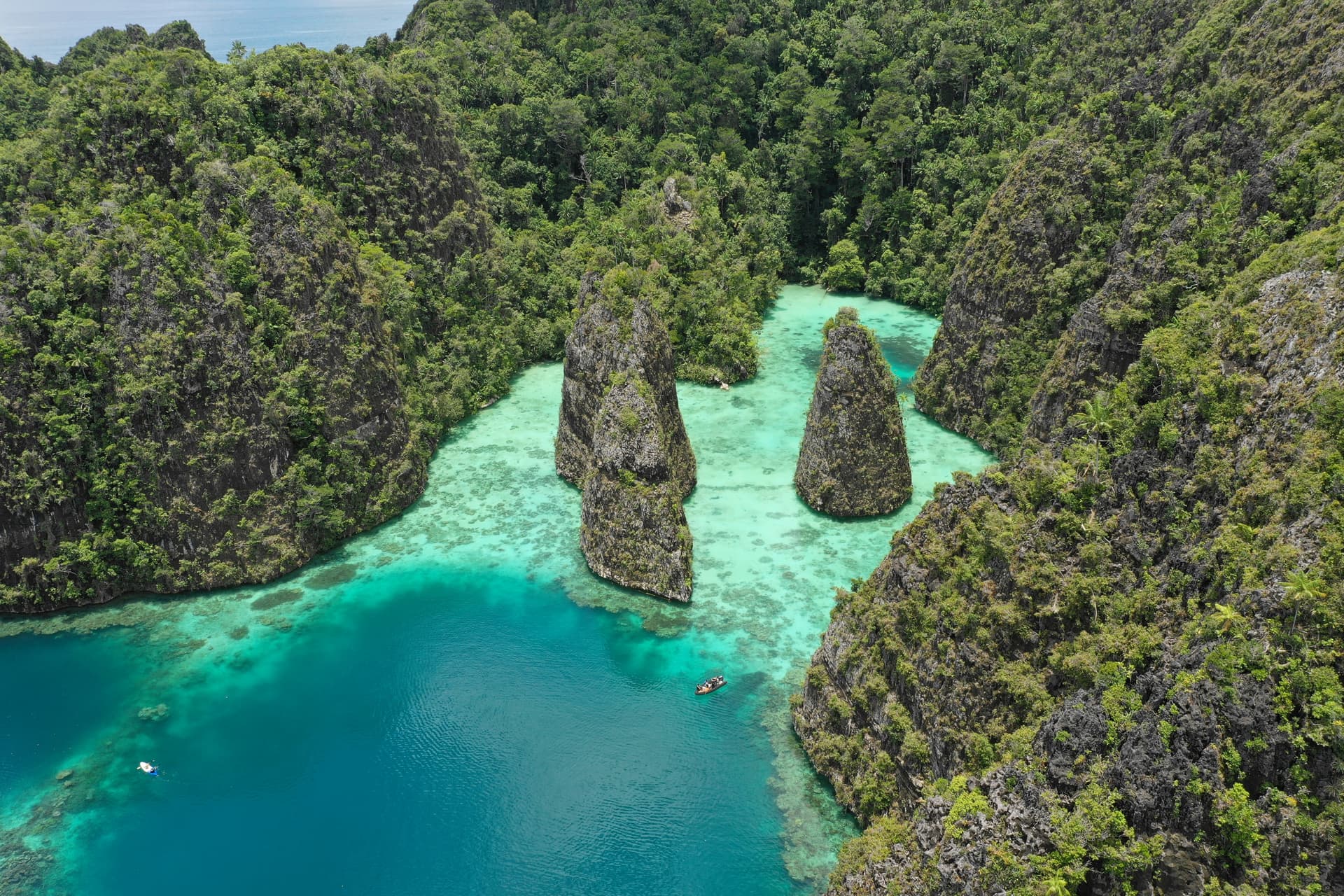
Good shelterThe image that defines Raja Ampat — a jigsaw of mushroom-shaped karsts over a turquoise lagoon. Climb Mount Pindito at first light (a steep forty minutes) for the panorama, then kayak the hidden channels below.
0.1700°N, 130.0200°ERanger postHiking trailKayakingSnorkelling
02
Piaynemo
Good shelterA boardwalk viewpoint over a second, equally cinematic cluster of islets — quieter than Wayag and an easy tender ride to the steps. The reef below is pristine.
0.5700°S, 130.2700°EViewpoint boardwalkSnorkellingRanger fee point
03
Misool
Good shelterThe remote south, kept for the bespoke list and home to a celebrated private marine reserve. Dive Magic Mountain and Boo Windows at slack tide for schooling barracuda, wobbegongs and soft-coral walls in full bloom.
2.0200°S, 130.5500°EDive sitesLagoon anchoragesRock-art sites
04
Arborek & Mansuar
Fair shelterA village-run jetty famous for its resident schools of fish, with the Dampier Strait manta cleaning stations a short hop away. Coffee ashore with the dive captain who grew up here.
0.5600°S, 130.5300°EVillage homestaysManta sitesJetty snorkelling
05
Kabui Bay
Excellent shelterA sheltered passage of jade water threaded between karst walls near Waigeo — calm, mirror-still at dawn, and ideal for paddleboarding before the day begins.
0.4300°S, 130.6900°EProtected anchoragePaddleboardingBirdwatching
At the table
What you'll eat
Papuan tables lean on the day’s catch and the garden: reef fish and tuna landed beside the boat, sago and cassava from the islands, and the bright heat of Indonesian sambal. Your chef provisions from village fishermen each morning, so dinner on the aft deck is rarely more than a few hours from the water.
Ikan Bakar Manokwari
Charcoal-grilled reef fish dressed with a raw chilli-and-lime sambal — the signature flavour of West Papua.
Papeda
A traditional sago porridge served with a turmeric-yellow fish soup (ikan kuah kuning), the staple of the Papuan coast.
Udang Selingkuh
The curious “cheating prawn” of the highlands — a freshwater crustacean with lobster-like claws, grilled simply.
Sambal Colo-Colo
A fresh eastern-Indonesian relish of tomato, shallot, chilli and lime that accompanies almost everything.
Ashore
Cultural highlights
Misool Rock Art
Ochre hand-prints and figures painted on the limestone overhangs thousands of years ago, viewed from the tender at the water’s edge.
Birds of Paradise
A pre-dawn jungle trek on Waigeo to witness the red bird of paradise display at its lek — one of the great wildlife spectacles of the archipelago.
Village Welcome
Many anchorages sit beside Papuan communities; a respectful visit ashore — often arranged by the crew — is part of the voyage.
Arborek Weaving
The island’s women are known for their pandan-leaf hats and baskets, sold from the jetty.
Good to know
Raja Ampat charter — questions answered
When is the best time to charter Raja Ampat?
October to April brings the calmest seas and the best underwater visibility — often beyond 30 metres. Manta season peaks December through March. The southeast monsoon from June to August is generally avoided for the open crossings.
How do I get to Raja Ampat for a charter?
Fly to Sorong in West Papua, usually via Jakarta or Makassar, where liveaboard and bespoke phinisi charters board. Some southern itineraries stage from Misool or Waisai depending on the season.
How many days do I need in Raja Ampat?
Because the archipelago is vast and remote, 7 to 10 nights is ideal — enough to reach both the northern Wayag and Piaynemo karst and the southern Misool reefs.
Is Raja Ampat the best diving in the world?
It sits at the heart of the Coral Triangle, with more recorded fish and coral species than anywhere else on Earth — manta cleaning stations, soft-coral walls and extraordinary fish density for divers and snorkellers alike.
What does it cost to enter the marine park?
A Raja Ampat marine-park entry tag is required; your crew arranges and includes it. It directly funds local conservation and community patrols.
Cruising ground
Plan a Raja Ampat voyage — vessels, seasons & map