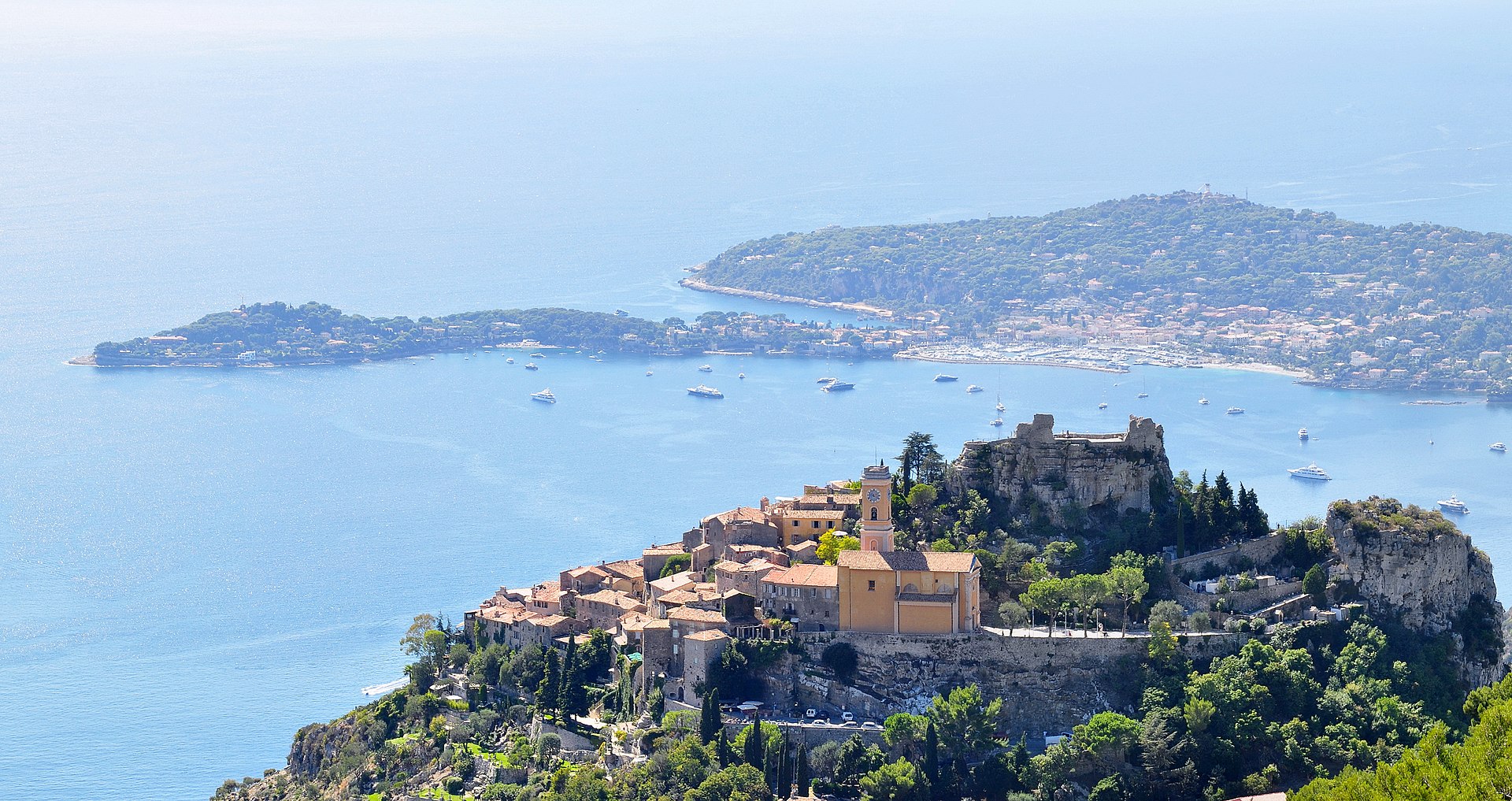
At first light the Costa Smeralda gives itself away slowly: low granite headlands the colour of old gold, junipers bent by the maestrale, and water that shades from jade to lapis as the depth falls away beneath the hull. This is the coast Prince Karim Aga Khan IV conjured from empty maquis in 1962, and from a yacht it reads exactly as he intended — discreet, low-built, almost secret. Drop anchor off Cala di Volpe and the morning belongs entirely to you, before Porto Cervo wakes and the season begins again.
Why the Costa Smeralda
Northeast Sardinia’s Emerald Coast is barely sixty years old as an idea. In March 1962 a young Aga Khan IV and a handful of partners formed the Costa Smeralda Consortium, acquiring some 1,800 hectares of empty coast between Liscia di Vacca, Porto Cervo, Cala di Volpe and Capriccioli, and ruling it with a now-famous architectural code: low buildings, natural stone, nothing to break the line of the hills. The prince, who died in early 2025, left a coast that still obeys him. The result is a stretch of wind-sculpted granite, juniper and improbably clear water that rewards arrival by sea above all — each bay a separate room, each beach reached most gracefully by tender.
A coast built to be discreet, and best read from the water.
Porto Cervo & the Old Port
Porto Cervo is the heart — a stage-set village of pale arcades and bougainvillea designed by Luigi Vietti, Jacques Couëlle and the Busiri Vici. Its marina splits in two: the year-round New Marina and the seasonal Porto Vecchio, open through the summer and linked to the old centre by a much-photographed wooden footbridge. Above the quay, the Promenade du Port descends past galleries and flagship boutiques, while the Piazzetta, with the pink-stoned Cervo Hotel at its edge, fills slowly through the long aperitivo hour. Berths here are limited and never guaranteed without a confirmed reservation — peak weeks are best secured months ahead — so most large yachts lie at anchor and come ashore by tender.
The Great Bays & Beaches
South of the village the coast unfolds into its finest anchorages. Cala di Volpe, the deep, sheltered bay crowned by its eponymous hotel, is the social centre of gravity; neighbouring Romazzino and Liscia di Vacca offer calmer water and private sand. The beaches reward a short tender run: Spiaggia del Principe, long associated with the Aga Khan, hides behind a rocky path with white sand and shifting turquoise shallows, while Liscia Ruja, the longest strand on the coast, runs reddish-gold between Cala di Volpe and Portisco. None of it is hurried. Mornings are for swimming off the stern, afternoons for the slow drift between coves as the light deepens toward gold.
Each bay a separate room; each beach a tender ride away.
The Maddalena Archipelago
An hour northwest, the La Maddalena Archipelago National Park scatters some sixty granite islands across the strait toward Corsica — the cruising prize of any Sardinian voyage. On Spargi, the linked coves of Cala Corsara hold fine white sand and water of an almost tropical clarity. Caprera, Garibaldi’s island of exile, guards Cala Coticcio, nicknamed “Tahiti.” And Budelli keeps the legendary Spiaggia Rosa, its pink sand protected since 1998: landing, swimming and anchoring close in are forbidden, so it is admired only from offshore, by tender. Anchoring throughout the park is regulated, with authorised buoys in many bays — a place to move gently and leave no trace.
The Table & the Night
Dinner on the Costa Smeralda runs from the grand to the gloriously simple. At Hotel Cala di Volpe, Nobu’s Matsuhisa and the meat-led Beefbar sit beside the hotel’s own Sardinian kitchen; in the village, Il Pomodoro has poured wine off the Piazzetta since 1976, while Novikov brings Asian-Italian fusion to the Cervo Hotel and Spinnaker keeps a thirty-year following on the Liscia di Vacca road. Then the night turns. Phi Beach unfolds across the granite of Forte Cappellini at Baja Sardinia for the coast’s defining sunset; Twiga, the reinvention of the old Billionaire, anchors the after-hours; and the long-running Sottovento carries the small hours.
Sunset at Phi Beach, then the granite holds the music until dawn.
When to Go & How It Sails
The season runs late May to late September, with July and August the undisputed scene — the weeks when the largest fleet gathers, the clubs run at full tilt, and Porto Cervo becomes the Mediterranean’s most concentrated display of yachts. It is also the most demanding: berths, the marquee tables and the best beach service should be locked in well ahead. June and September are gentler, warm and far less pressed. The maestrale can rise in the afternoons — an argument for east- and south-facing anchorages and an early start. Five to seven days lets you weave the village, the southern beaches and the Maddalena without rushing a single cove.